
Uncategorized
How Pre-Primary Education Builds Confidence and Independence

Early childhood is a time when children discover new things every day. They learn to communicate, make choices, interact with others, and understand the world around them. The experiences children receive during these early years can influence how they approach learning and everyday situations.
A well-planned pre-primary education environment gives children opportunities to explore, participate, make simple decisions, and complete age-appropriate tasks. These experiences can gradually develop confidence in young children while also encouraging them to become more independent.
What Is Confidence in Young Children?
Confidence in young children is not simply about speaking loudly or being comfortable in front of a crowd. It is about feeling secure enough to try something, express an opinion, communicate with others, and continue learning when something feels difficult.
A child may show growing confidence by:
- Answering a question in class
- Talking with classmates
- Trying an unfamiliar activity
- Sharing an idea or drawing
- Asking questions
- Attempting a task without immediate help
- Trying again after making a mistake
- Participating in group activities
These small actions can show that a child is becoming more comfortable with their abilities.
How Pre-Primary Education Builds Confidence
Children develop confidence through regular experiences. A supportive classroom can provide many opportunities for children to participate without feeling pressured.
1. Giving Children Opportunities to Speak
Young children often have many ideas but may need encouragement to express them.
Storytelling, picture discussions, classroom conversations, show-and-tell activities, and simple questions can encourage children to speak.
When teachers listen patiently, children begin to understand that their thoughts are valuable. With regular practice, they may become more comfortable communicating with teachers and classmates.
2. Learning Through Play
Play is an important part of early childhood learning. Children can develop several skills while playing because they are actively making decisions and responding to different situations.
Building blocks, pretend play, puzzles, matching games, and role-playing activities can encourage children to think independently.
For example, children involved in pretend shop activities may decide who will be the shopkeeper, what they want to sell, and how they will communicate with one another.
Such simple experiences can encourage communication, cooperation, creativity, and confidence.
3. Giving Children Small Responsibilities
Independence can begin with simple classroom responsibilities.
Children can be encouraged to:
- Put toys back after playing
- Keep books in the correct place
- Organise their learning materials
- Carry their own belongings
- Help distribute classroom materials
- Follow simple classroom routines
Completing these tasks can give children a feeling of achievement.
When children realise that they can complete small responsibilities themselves, they may become more willing to take on new tasks.
4. Allowing Children to Make Simple Choices
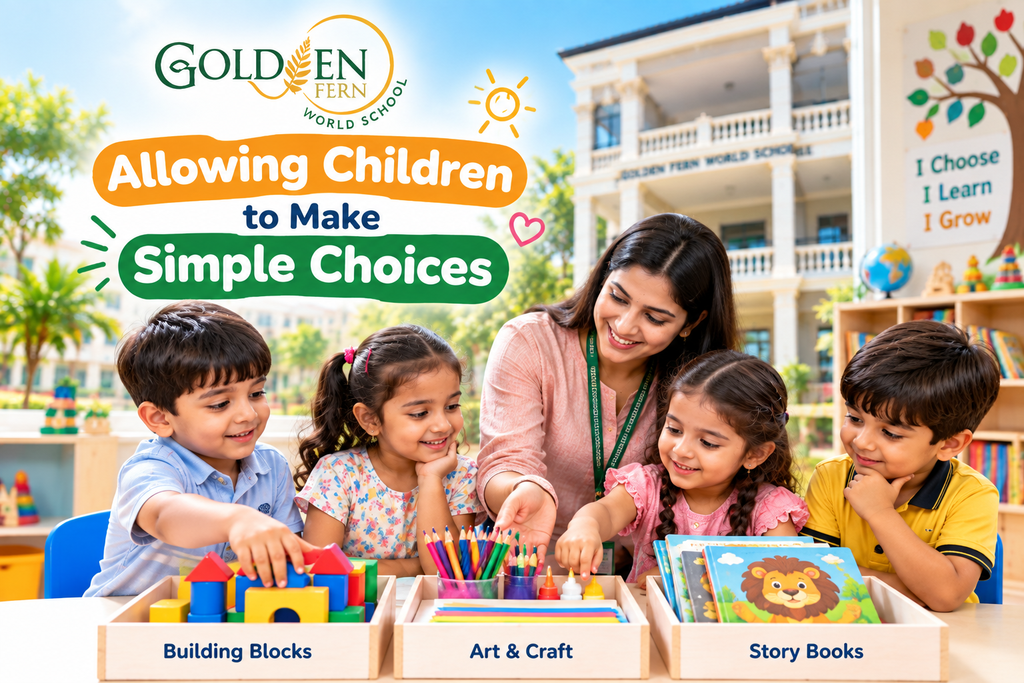
Children can develop independence when they are given suitable choices.
Instead of making every decision for them, adults can offer two or three appropriate options.
For example:
“Would you like to draw with crayons or colour with pencils?”
The choice may be simple, but it allows the child to think, decide, and act independently.
Regular opportunities like these can gradually strengthen decision-making skills.
5. Creating a Comfortable Environment for Mistakes
Mistakes are a natural part of childhood learning.
A child may colour outside a line, forget an instruction, struggle with a puzzle, or pronounce a word incorrectly. These experiences should be treated as opportunities to learn rather than reasons for embarrassment.
When teachers encourage children to try again, children can begin to understand that mistakes do not mean failure.
This can make them more willing to explore new activities.
Activities That Build Confidence in Young Children
Different pre-primary activities can provide children with different ways to express themselves.
Storytelling Activities
Stories introduce children to new words, characters, situations, and emotions.
After listening to a story, teachers can ask children what they think happened or which character they liked.
Allowing children to share their own answers encourages communication and independent thinking.
Art and Craft Activities
Drawing, painting, colouring, and craft activities allow children to make creative decisions.
Children can choose colours, shapes, materials, and designs according to their ideas.
When children see something they created themselves, it can give them a sense of accomplishment.
Music and Rhymes
Songs, action rhymes, rhythm activities, and movement games encourage children to participate in an enjoyable way.
Some children may initially watch others before joining. As they become comfortable, they may gradually participate more actively.
Group Activities
Group activities teach children how to communicate, cooperate, share materials, and take turns.
Working together also helps children understand that everyone can contribute something different.
Outdoor Activities
Outdoor play provides opportunities for children to move, explore, and discover.
Simple outdoor games can encourage children to take initiative, follow rules, interact with friends, and become comfortable with new experiences.
The Role of Teachers in Developing Independence
Teachers play a valuable role in helping young children become confident and independent learners. At the pre-primary level, children still need guidance, but they also need enough space to try things on their own.
For example, when a child finds an activity difficult, a teacher can offer a simple clue or encouragement instead of completing the activity for them. This gives the child time to think, try, and find a way forward.
Small experiences like these can slowly build self-confidence. Children begin to feel, “I can try this myself.”
With regular encouragement and suitable responsibilities, children can become more comfortable making decisions, solving simple problems, and handling everyday tasks independently.
Encouragement Is Better Than Comparison
Every child grows and learns at their own pace. Some children are naturally comfortable speaking in front of others, while some prefer to watch and listen before joining in.
For example, one child may quickly answer questions during a classroom discussion, while another may take several days or weeks to feel comfortable speaking. Both children are learning in their own way.
Comparing children can make them feel pressured or unsure about themselves. Instead, parents and teachers can focus on each child’s personal progress.
A child who starts joining a group activity after previously avoiding it has made progress. Similarly, a child who begins attempting a task without immediately asking for help is also developing independence.
Every small step matters.
How Parents Can Encourage Independence at Home
Children continue learning important life skills after they leave the classroom. Home is another place where parents can help children become more confident and independent.
Parents can give children simple opportunities to take part in everyday activities, such as:
- Choosing between two suitable outfits
- Putting toys away after playing
- Selecting a bedtime story
- Helping arrange simple household items
- Carrying their own lightweight belongings
- Trying a simple task before asking for help
- Talking about what they learned at school
- Sharing their thoughts and feelings
Parents do not need to expect children to do everything on their own. Instead, they can offer small responsibilities that match the child’s age and ability.
When children are trusted with simple tasks, they can gradually develop a stronger sense of responsibility.
Confidence Should Develop Without Pressure
Every child has a different personality, learning style, and comfort level.
Some children enjoy speaking, singing, or performing in front of others. Others may feel more comfortable watching first and joining later. Neither approach is wrong.
Confidence grows best when children feel supported rather than pressured.
Teachers and parents can give children enough time to become comfortable with new situations. Gentle encouragement, positive feedback, and repeated opportunities can help children participate when they are ready.
When children know that they are allowed to learn at their own pace, they may become more willing to explore and try new things.
Why Confidence and Independence Matter for Future Learning
The habits children develop during their early years can support them as they move into higher classes.
A child who becomes comfortable sharing ideas may participate more actively in classroom discussions. A child who learns to make simple choices may feel more prepared when facing new situations.
Similarly, children who practise small responsibilities can gradually become more organised and responsible.
Confidence and independence can support many areas of development, including:
- Communication
- Decision-making
- Problem-solving
- Social interaction
- Responsibility
- Classroom participation
- Positive learning habits
These skills are useful not only during the pre-primary years but also as children continue their educational journey.
Supporting Every Child’s Individual Growth
There is no single way for a child to show confidence.
For one child, confidence may mean answering a question in class. For another, it may mean joining a group game or talking to a new friend. For another child, it may simply mean trying a difficult puzzle instead of giving up.
These moments may look small, but they are important parts of development.
Pre-primary education can give children opportunities to explore their interests, practise new skills, interact with others, and gradually take responsibility for simple tasks.
The focus should be on helping each child make progress rather than expecting every child to develop in exactly the same way.
How Golden Fern World School Supports Confident Learning
At Golden Fern World School, children are encouraged to learn through meaningful and age-appropriate experiences.
Classroom activities, creative tasks, play-based learning, group activities, conversations, and everyday routines can give children opportunities to communicate, make choices, work with others, and take responsibility.
A positive learning environment can help children feel comfortable asking questions, sharing ideas, and trying new activities.
The aim is to support children as they gradually develop confidence, independence, communication skills, and a positive attitude towards learning.
Conclusion
Confidence often begins with small everyday experiences.
A child answering a question, choosing an activity, completing a classroom task, talking to a friend, or trying again after making a mistake may seem like a simple moment. However, these experiences can gradually shape how children approach learning and new situations.
A supportive pre-primary environment gives children the encouragement and freedom they need to discover their abilities.
With the combined support of teachers and parents, confidence in young children can grow naturally alongside independence, communication, decision-making, and responsibility.
Early education is not only about preparing children for their next class. It is also about helping them develop the belief that they can try, learn, improve, and do things for themselves.