
Uncategorized
Importance of Play-Based Learning in Pre-Primary Education

Introduction
Children learn in many different ways during their early years. They learn by watching, touching, asking questions, moving, and trying new things.
Play based learning gives children a natural way to explore new ideas. Instead of only listening to a teacher, children can learn through games, stories, building activities, art, movement, and pretend play.
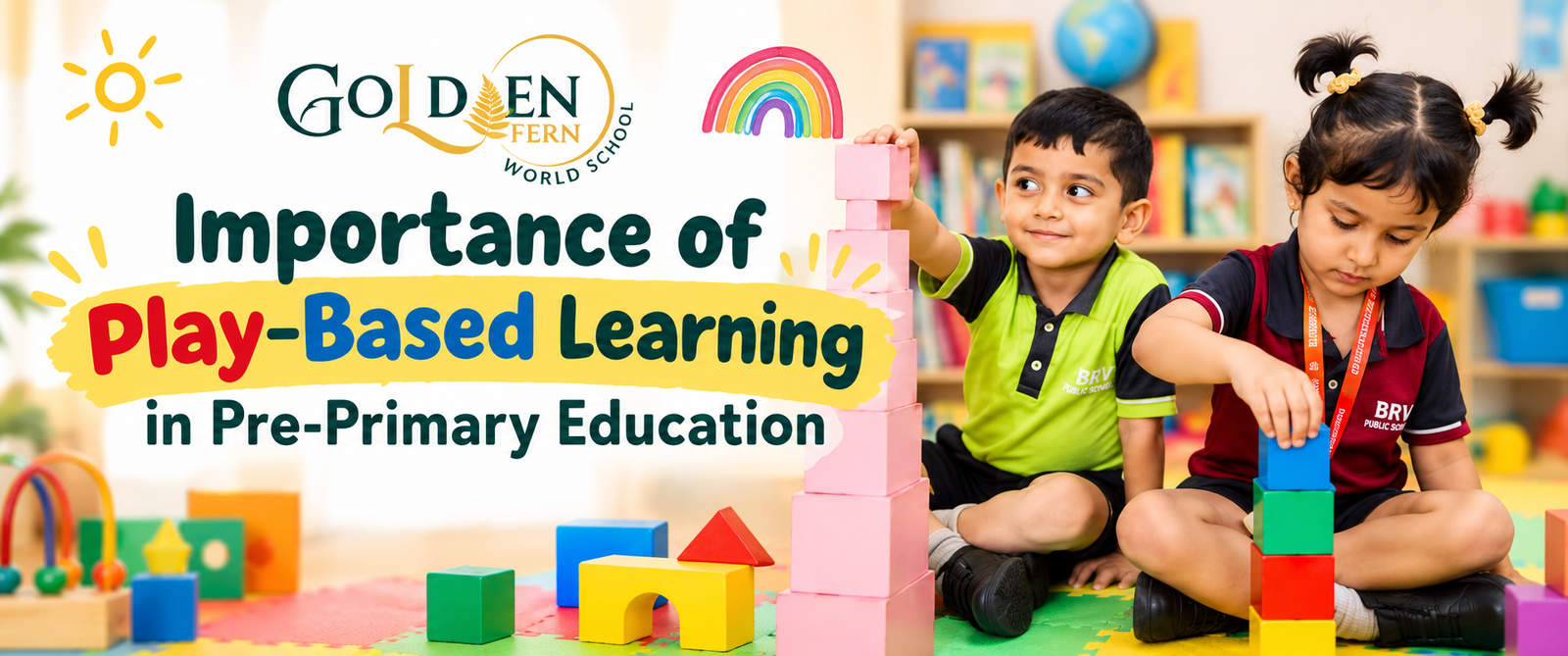
For example, a simple building activity can help children understand shapes and sizes. At the same time, it can encourage them to think, communicate, and make choices.
Therefore, play can make early learning more enjoyable and meaningful.
At Golden Fern World School, we believe that children learn best when they take an active part in their learning experiences.
What Is Play-Based Learning?
Play based learning means learning through meaningful play activities. Children learn while they explore, create, move, communicate, and solve simple problems.
For example, children can build towers with blocks. They can also complete puzzles, create drawings, act out stories, and play group games.
Although these activities look simple, they can support many areas of development. Children can practise thinking, communication, coordination, creativity, and social skills while they play.
Why Is Play-Based Learning Important?
The early years are an important stage of a child’s development. During this period, children begin to develop communication, social, physical, emotional, and thinking skills.
Play provides regular opportunities to practise these skills. In addition, children can learn at their own pace while enjoying the activity.
Makes Learning Enjoyable
Young children usually enjoy activities that involve movement, imagination, and discovery. As a result, play can make learning feel less difficult and more interesting.
For example, a counting game can introduce numbers in a simple way. Children can count toys, blocks, or colourful objects while taking part in the activity.
Similarly, a story game can help children learn new words. This positive experience can encourage children to develop an interest in learning.
Builds Creativity and Imagination
Children use their imagination when they create stories, build structures, draw pictures, or take part in pretend play.
For example, a child may turn a group of chairs into a bus. Another child may use blocks to create a small house.
There is not always one correct result during creative play. Therefore, children can experiment with their own ideas and explore different possibilities.
In this way, play can encourage creativity and imagination.
Improves Communication Skills
Play creates natural opportunities for children to talk and listen. During group activities, children can ask questions, explain ideas, and learn new words.
For example, children can pretend to run a small shop. One child can become the shopkeeper, while another can become the customer.
As they play, they can practise simple conversations. In addition, they learn to listen and respond to their classmates.
Therefore, regular play can support children’s communication skills.
Develops Problem-Solving Skills
Children often face small challenges during play. A puzzle piece may not fit, or a block tower may fall.
Instead of stopping immediately, children can try another approach. They may change the position of a block or look for a different puzzle piece.
As a result, children get opportunities to think about possible solutions. They can also learn that mistakes are a normal part of learning.
Over time, these experiences can support persistence and problem-solving skills.
Supports Social Skills
Children often play with their classmates. During group activities, they learn to share materials, wait for their turn, listen to others, and work together.
For example, a group of children may build one large structure with blocks. Each child can contribute an idea or help with a small part of the activity.
Sometimes, children may have different opinions. With teacher support, they can learn to communicate and solve small disagreements.
As a result, play can help children become more comfortable in group situations.
Builds Confidence
Completing a small task can give a child a sense of achievement. For example, a child may complete a puzzle, build a tower, finish a drawing, or participate in a group game.
These small successes can encourage children to try new activities. In addition, positive encouragement from teachers can make children feel proud of their effort.
Instead of focusing only on the final result, teachers can appreciate the learning process.
For example, a teacher can say, “You kept trying until you found a solution.”
Such encouragement can help children develop confidence.
Encourages Independent Thinking
Play often gives children simple choices. They may choose a colour, select a toy, decide what to build, or choose a character during pretend play.
These small decisions give children opportunities to think independently. They can also learn to express their preferences.
For example, a teacher may ask, “Which block would you like to use?”
In this way, children can practise making simple decisions in a safe environment.
Types of Play-Based Learning Activities
Different activities create different learning opportunities. Therefore, a balanced pre-primary classroom can include several types of play.
Building and Construction
Blocks and construction toys allow children to explore shapes, sizes, balance, and space.
Children can build towers, houses, bridges, and other structures. When a structure falls, they can try again and change their design.
As a result, building activities can support creativity, planning, coordination, and problem-solving.
Pretend Play
Pretend play allows children to create imaginary situations. A classroom corner can become a shop, clinic, restaurant, home, or post office.
Children can take different roles and communicate with one another. For example, one child can become a doctor while another child becomes a patient.
Through these simple situations, children can practise language, imagination, cooperation, and social skills.
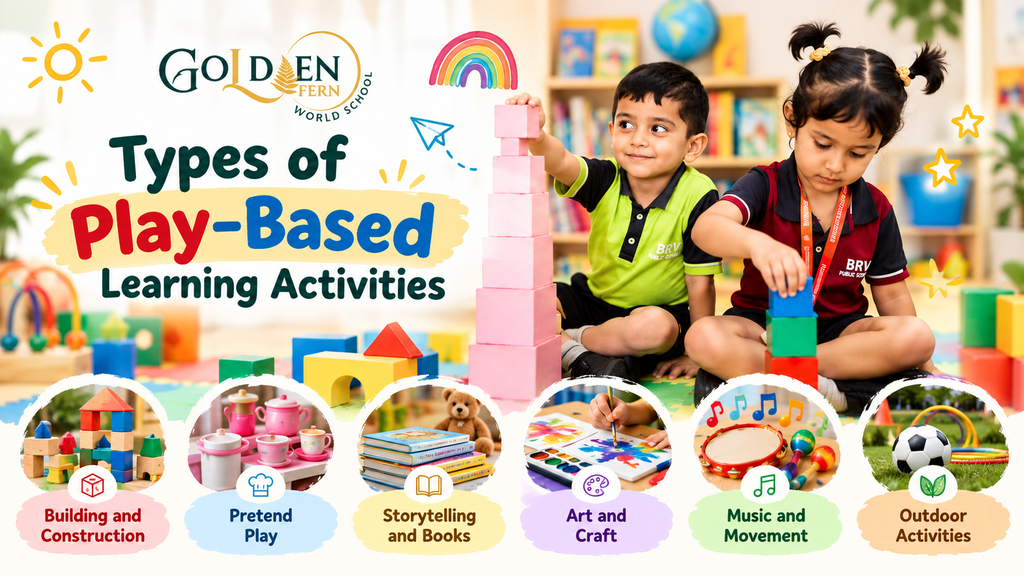
Storytelling and Books
Stories can help children listen, understand, imagine, and communicate. Teachers can read short stories and ask simple questions about the characters and events.
For example, children can discuss what a character did and why the character made a particular choice.
They can also create their own stories or suggest different endings. In this way, storytelling can make language learning more engaging.
Art and Craft
Drawing, painting, clay work, and simple crafts allow children to explore colours, shapes, textures, and materials.
Children can express their ideas through artwork. They can also experiment with different ways of creating something.
The final picture does not always need to be perfect. Instead, the creative process can give children opportunities to explore and express themselves.
Music and Movement
Songs, rhymes, dancing, and movement games can make learning active and enjoyable.
Children can clap, move, dance, and follow simple rhythms. These activities can support listening, memory, coordination, and physical development.
In addition, music and movement can help children participate confidently in group activities.
Outdoor Activities
Outdoor play gives children space to move and explore. Children can run, jump, balance, observe nature, and play simple group games.
They may also notice flowers, leaves, insects, sounds, and other things around them.
For example, a teacher can ask children to find objects with different colours during an outdoor activity.
Therefore, outdoor play can support physical development, observation, curiosity, and social interaction.
How Teachers Support Play-Based Learning
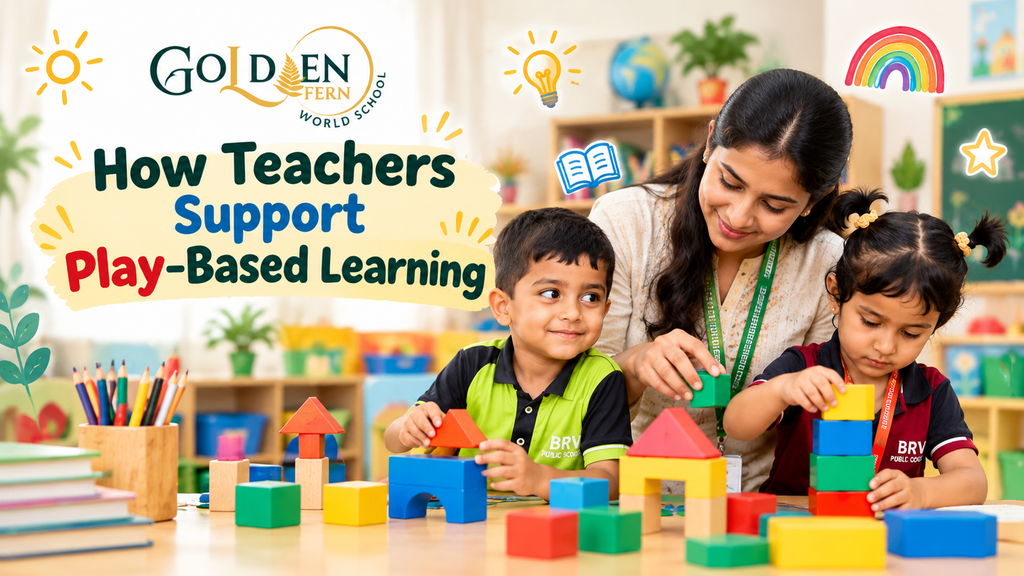
Teachers have an important role in creating meaningful play experiences. They can prepare suitable materials based on children’s age, interests, and abilities.
Teachers can also observe how children participate in activities. When a child faces a challenge, the teacher can provide a small hint instead of immediately giving the answer.
For example, a teacher may ask, “What could you try next?”
This question gives children time to think. At the same time, it allows them to find their own solutions.
Therefore, teachers can guide children while still giving them enough freedom to explore.
How Play-Based Learning Supports School Readiness
School readiness is about more than recognising letters and numbers. Children also need communication, concentration, cooperation, listening, problem-solving, and independence.
Play gives children regular opportunities to practise these skills.
For example, a group game can teach children to follow simple instructions. A puzzle can encourage problem-solving. Similarly, pretend play can support communication.
Building activities can encourage children to plan and make decisions.
As a result, play based learning can support several skills that children may need as they move into formal schooling.
How Parents Can Encourage Play-Based Learning at Home
Parents can support play based learning through simple activities at home. These activities do not need expensive toys or special equipment.
Read Stories Together
Reading short stories with your child can create a valuable learning experience.
Ask simple questions about the characters and events. You can also ask what your child thinks might happen next.
In addition, allow your child to describe pictures or create a different ending to the story.
Build With Blocks
Give children blocks or other safe building materials. Let them create their own structures without giving too many instructions.
For example, ask your child to build a house, bridge, or tower.
Afterwards, ask them to explain what they have made. This can encourage communication and creative thinking.
Encourage Pretend Play
Create a simple pretend shop, kitchen, clinic, or classroom at home.
Allow your child to choose a role and create their own situation. You can join the activity when your child invites you.
As a result, pretend play can become an enjoyable way to support imagination and communication.
Give Simple Choices
Give children two suitable choices during everyday activities.
For example, ask, “Would you like the red crayon or the blue crayon?”
Small choices can help children practise decision-making. They can also learn to express their preferences.
Explore Outdoors
Take children outside for a short walk or play session.
Ask them what they can see and hear. Talk about plants, colours, birds, vehicles, sounds, and other things around them.
For example, you can ask your child to find three different colours.
In this way, a simple outdoor activity can become an interesting learning experience.
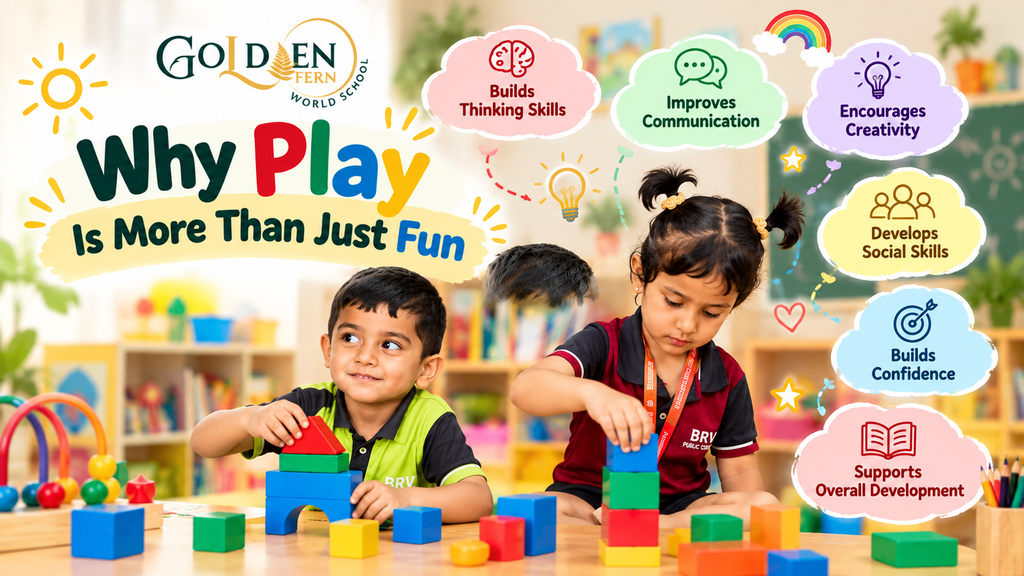
Why Play Is More Than Just Fun
Play may look simple to adults. However, children can learn many important skills while playing.
A child counting toys is practising numbers. A child building a tower is exploring balance. Similarly, a child telling a story is practising language.
When children play with classmates, they are also learning to share, communicate, and cooperate.
A child completing a puzzle is practising problem-solving. Another child creating artwork is exploring creativity.
Therefore, play can become an important part of meaningful early learning.
Creating a Positive Play-Based Learning Environment
Children need a safe and welcoming environment where they can explore freely. A positive classroom can include building blocks, picture books, art materials, puzzles, pretend-play resources, musical instruments, outdoor equipment, and simple learning games.
Teachers can give children enough time to explore each activity. They can also encourage children to make simple choices.
When children face challenges, teachers can offer guidance without taking over the activity.
For example, a teacher can ask questions that encourage children to think about their next step.
In this way, the classroom can become a place where children feel comfortable trying, exploring, and learning from mistakes.
At Golden Fern World School, we aim to create joyful learning experiences that encourage curiosity, creativity, confidence, and independence.
The Role of Play in Early Childhood Development
Play can support several areas of early childhood development at the same time.
Physical activities can improve movement and coordination. Group games can support social development. Stories and conversations can strengthen communication.
Creative activities can encourage imagination. Puzzles and building tasks can develop thinking and problem-solving.
Moreover, children can learn important emotional skills while playing. They can practise patience, handle small disappointments, and experience the satisfaction of completing a task.
For this reason, play is an important part of a balanced pre-primary learning experience.
Conclusion
Play based learning gives children a natural way to learn. Children can learn while building, creating, talking, moving, exploring, and playing with their friends.
These experiences can support communication, creativity, problem-solving, confidence, social skills, and independent thinking.
Moreover, play allows children to learn through experiences that are meaningful to them. They can try new ideas, make simple choices, and learn from their mistakes.
Most importantly, children can enjoy the process of learning.
At Golden Fern World School, we believe that meaningful and joyful learning experiences can help children build a strong foundation for their future.
Frequently Asked Questions
What Is Play-Based Learning?
Play based learning is an approach where children develop knowledge and skills through meaningful games, activities, exploration, and play.
Why Is Play-Based Learning Important in Pre-Primary Education?
Play based learning gives children opportunities to develop communication, creativity, confidence, social skills, problem-solving, and independent thinking.
What Are Examples of Play-Based Learning?
Examples include building blocks, pretend play, storytelling, puzzles, art, music, movement games, and outdoor activities.
Can Parents Use Play-Based Learning at Home?
Yes. Parents can encourage learning through stories, drawing, building activities, pretend play, simple games, and outdoor exploration.
Does Play-Based Learning Help With School Readiness?
Yes. Play can help children practise communication, concentration, cooperation, problem-solving, listening, and independent thinking.
Is Play-Based Learning Suitable for Pre-Primary Children?
Yes. Play-based activities can be adapted to suit children’s age, interests, abilities, and learning needs.