
Uncategorized
Why Outdoor Activities Are Important for Young Children

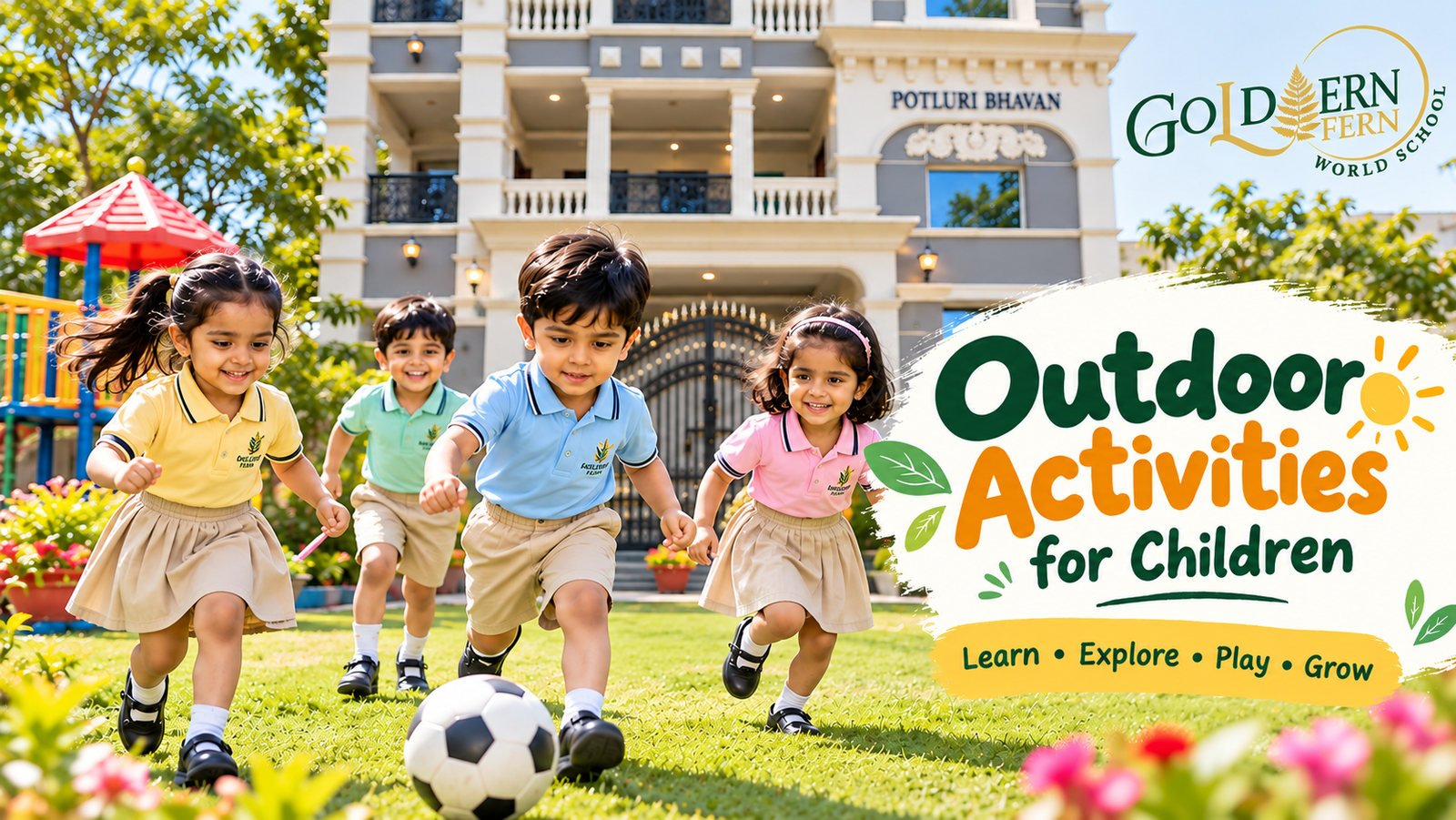
Young children learn about the world through movement, exploration, play, and everyday experiences. While classroom learning is important, children also need opportunities to step outside, move their bodies, observe nature, and interact with others. Outdoor activities for children provide a fun and natural way to support their physical, social, emotional, and cognitive development.
Outdoor play does not always need to involve complicated games or special equipment. Simple activities such as running, jumping, playing with a ball, observing plants, walking in a garden, or enjoying group games can give young children valuable learning experiences.
At Golden Fern World School, we believe that early childhood education should provide children with opportunities to learn through both structured activities and playful experiences.
What Are Outdoor Activities for Children?
Outdoor activities are play and learning experiences that take place outside the classroom. They can include physical games, nature exploration, creative activities, group play, and simple discovery-based tasks.
Some examples include:
- Running and jumping games
- Ball games
- Nature walks
- Gardening activities
- Sand and water play
- Outdoor drawing and painting
- Obstacle courses
- Group games
- Exploring leaves, flowers, and insects
- Free play in a safe outdoor space
These experiences allow children to use their bodies, senses, imagination, and communication skills while enjoying a different learning environment.
Why Are Outdoor Activities Important for Young Children?
Outdoor play offers several benefits during the early years. Children get opportunities to move, explore, communicate, make choices, and learn from their surroundings.
1. Supports Physical Development
Young children need regular movement to develop strength, balance, coordination, and body control.
Activities such as running, climbing, jumping, throwing, and catching encourage children to use different muscle groups. Regular physical play can also help children become more comfortable with movement and develop better coordination.
Outdoor activities can therefore become an enjoyable part of a child’s daily routine.
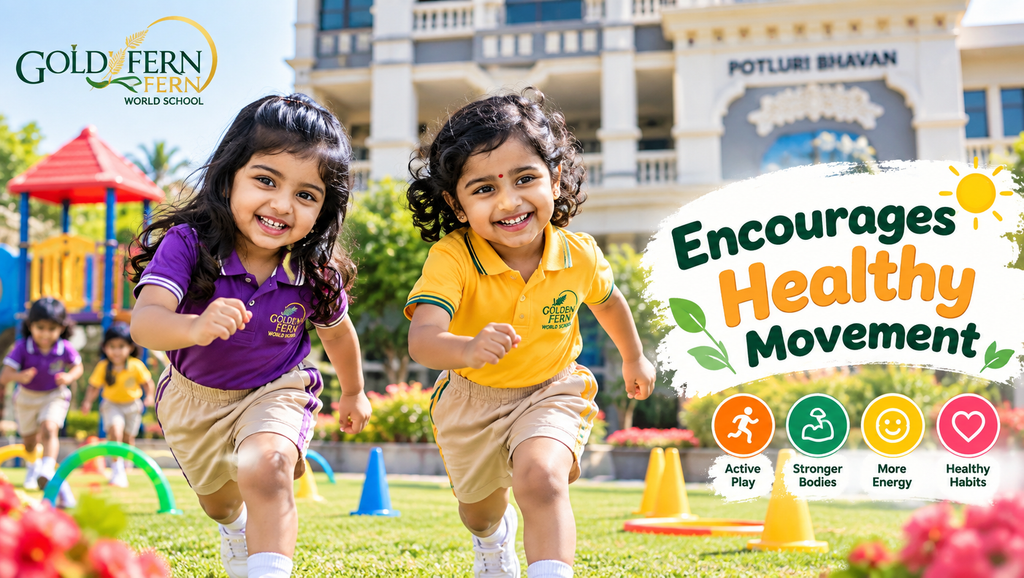
2. Encourages Healthy Movement
Children naturally have a lot of energy. Outdoor play gives them a positive space to use that energy through active movement.
Instead of remaining seated for long periods, children can run, walk, stretch, jump, and participate in age-appropriate games. These activities can help children develop an active attitude from an early age.
3. Develops Social Skills
Outdoor play often creates opportunities for children to play together.
When children participate in group games, they learn to:
- Share equipment
- Take turns
- Follow simple rules
- Listen to others
- Work as a team
- Solve small disagreements
- Encourage their friends
These everyday interactions help children gradually understand cooperation and respectful communication.
4. Builds Confidence and Independence
Outdoor activities allow children to make small decisions and try new things.
A child may decide which game to play, choose where to explore, or attempt a new physical activity. With appropriate adult guidance, these experiences can help children become more confident in their abilities.
Completing a simple challenge, such as balancing along a path or catching a ball, can also give children a sense of achievement.
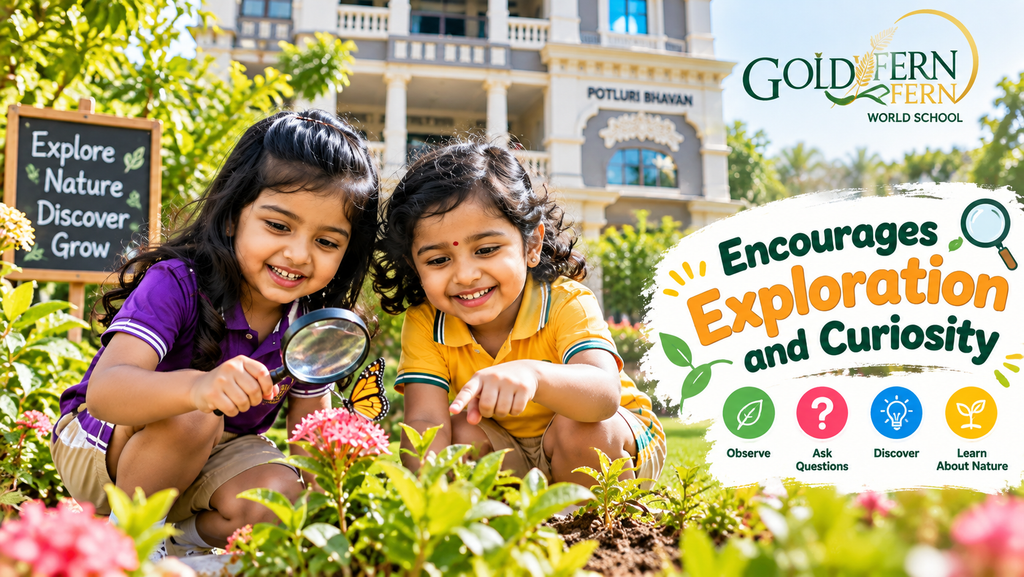
5. Encourages Exploration and Curiosity
Nature provides countless opportunities for children to ask questions.
A simple outdoor walk can encourage children to notice:
- Different types of leaves
- Flowers and plants
- Birds and insects
- Clouds and weather
- Stones and soil
- Shapes, colours, and textures
Children can learn by observing what is around them. This type of exploration can encourage curiosity and help them become interested in their environment.
6. Supports Cognitive Development
Outdoor play is not only about physical movement. Children also think, observe, remember, compare, and make decisions while playing.
For example, a teacher might ask children to find something green, count objects, identify different shapes, or compare the sizes of leaves.
Such simple activities can introduce early concepts related to:
- Numbers
- Colours
- Shapes
- Sizes
- Patterns
- Directions
- Observation
Learning becomes more meaningful when children can connect ideas with real experiences.
7. Helps Develop Communication Skills
Outdoor activities provide natural opportunities for children to talk with teachers and friends.
Children may describe what they see, explain the rules of a game, ask questions, or talk about something interesting they discovered.
These conversations help children practise vocabulary and express their thoughts more confidently.
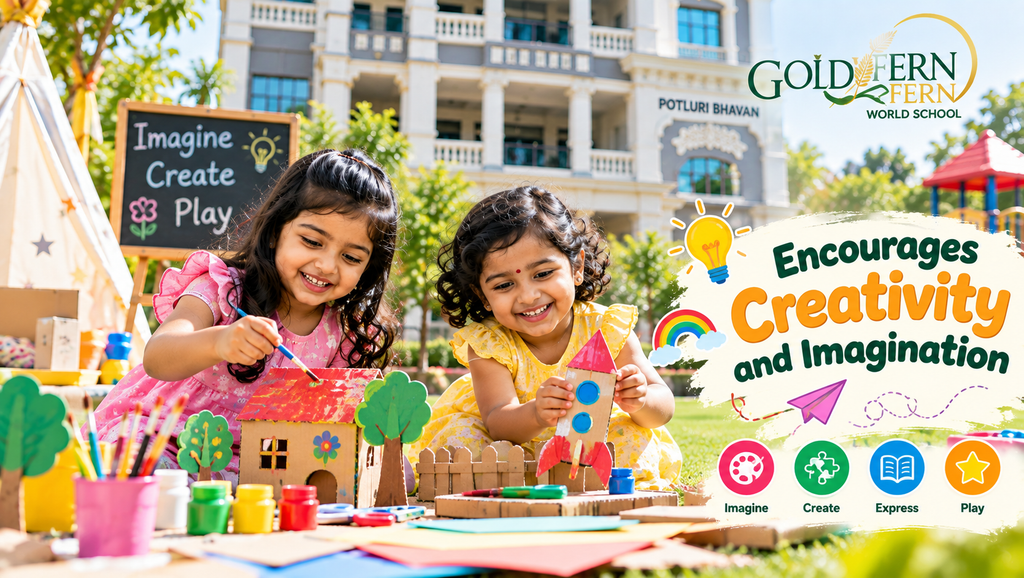
8. Encourages Creativity and Imagination
Outdoor spaces can become places for imaginative play.
A group of children might turn a simple area into a pretend shop, garden, adventure zone, or story setting. They can create games using their imagination and interact with their friends.
Creative outdoor play gives children freedom to experiment with ideas while enjoying an active environment.
9. Provides Opportunities for Sensory Learning
Young children learn through their senses. Outdoor environments offer a variety of sights, sounds, textures, and smells.
Children may feel grass, observe colourful flowers, listen to birds, notice the sound of wind, or explore different natural textures.
These experiences can make learning more engaging and help children become more aware of their surroundings.
10. Helps Children Learn About Nature
Early exposure to nature can help children develop an appreciation for the environment.
Teachers can introduce simple concepts such as caring for plants, keeping outdoor spaces clean, protecting small creatures, and understanding seasonal changes.
Activities such as planting seeds or watering plants can also introduce children to the idea that living things need care and attention.
Simple Outdoor Activities for Young Children
Parents and teachers do not need expensive equipment to create meaningful outdoor experiences. Simple activities can be both enjoyable and educational.
Nature Walk
Take children on a short walk and encourage them to observe plants, flowers, birds, and other natural objects.
Ball Games
Simple throwing, catching, kicking, and rolling games can support coordination and encourage active movement.
Outdoor Art
Children can draw pictures inspired by nature or create simple artwork using leaves and other safe natural materials.
Gardening
Allow children to participate in simple gardening tasks such as watering plants or observing how a seed grows.
Obstacle Course
Create a simple, age-appropriate course using safe spaces where children can walk, jump, crawl, or balance.
Colour Hunt
Ask children to find objects of different colours around the outdoor area. This can combine movement with early learning.
How Teachers Can Make Outdoor Learning Meaningful
Outdoor activities become even more valuable when adults guide children without controlling every part of their play.
Teachers can:
- Ask open-ended questions
- Encourage children to observe carefully
- Allow children to make simple choices
- Introduce new vocabulary
- Encourage teamwork
- Provide safe opportunities for exploration
- Connect outdoor experiences with classroom learning
For example, after observing different leaves outdoors, children can return to the classroom and draw or sort them according to colour, size, or shape.
This creates a connection between outdoor exploration and academic learning.
The Role of Parents in Outdoor Play
Parents can also encourage outdoor experiences at home. A family walk, visit to a park, simple gardening activity, or outdoor ball game can become a valuable learning opportunity.
Parents can make outdoor time more meaningful by asking questions such as:
“What do you see?”
“Can you find something yellow?”
“How many flowers can you count?”
“What sound can you hear?”
The goal is not to turn every outdoor activity into a lesson. Children also need time for free play, imagination, and simply enjoying themselves.
Creating a Safe Outdoor Environment
Safety should always be a priority when children are playing outdoors.
Adults should choose age-appropriate activities and supervise children carefully. Outdoor areas should be checked regularly for potential hazards, and children should be encouraged to follow simple safety rules.
Depending on the weather and activity, children may also need suitable clothing, drinking water, sun protection, and comfortable footwear.
A safe environment allows children to explore with greater confidence.
Outdoor Activities and Early Childhood Education
Outdoor experiences can complement classroom learning in many ways. A child may learn about colours inside the classroom and then identify those colours outdoors. They may learn counting and then count leaves, stones, or objects during an outdoor activity.
This combination of movement, observation, conversation, and hands-on experiences can make early learning more enjoyable.
For a pre-primary school, providing age-appropriate outdoor opportunities can therefore be an important part of creating a balanced learning environment.
Conclusion
Outdoor activities for children are much more than a break from classroom learning. They provide opportunities for children to move, explore, communicate, think creatively, build confidence, and understand the world around them.
Simple outdoor experiences can support physical development while also encouraging social interaction, curiosity, communication, and independent thinking. When children are given a safe and supportive environment to explore, everyday play can become a meaningful learning experience.
At Golden Fern World School, we believe young children learn best when they are given opportunities to explore, interact, create, and enjoy their early learning journey. A balanced approach that combines classroom experiences with meaningful outdoor activities can help children develop important skills for their future.