
Uncategorized
How Music and Rhymes Support Early Childhood Learning

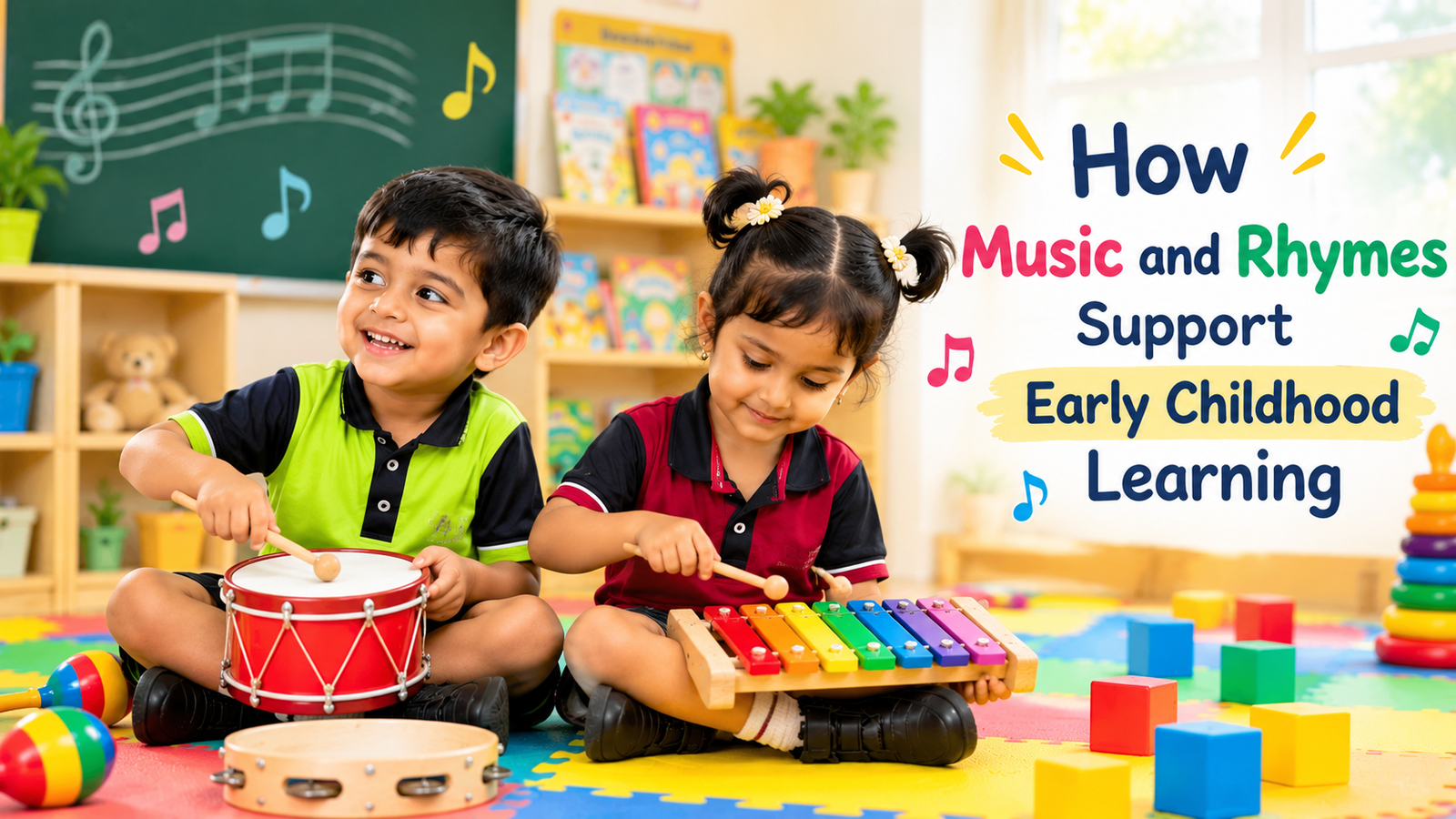
Children love sounds, songs, beats, and repetition. A simple rhyme can make a child smile, clap, move, or try to sing. These enjoyable moments can also become useful learning experiences.
In a pre-primary school, music and rhymes can be included in everyday classroom activities. Children can learn new words, practise sounds, improve listening, count numbers, follow instructions, and interact with other children.
Music makes learning feel natural and enjoyable. It gives children a chance to learn while they sing, move, listen, and play.
Why Music Is Useful for Young Children
Music gives children a different way to experience information. Instead of only listening to a teacher explain something, children can hear words through rhythm and repetition.
A familiar song can also make children feel comfortable participating in classroom activities.
Teachers can use music during learning time, movement sessions, group activities, and daily classroom routines.
1. Helps Children Learn New Words
Songs and rhymes can introduce children to new vocabulary.
A song about animals can introduce names of different animals. A song about the body can help children learn words such as hands, eyes, ears, and feet.
Children hear these words repeatedly and get opportunities to say them.
This makes music a useful activity for building everyday vocabulary.
2. Develops Listening Skills
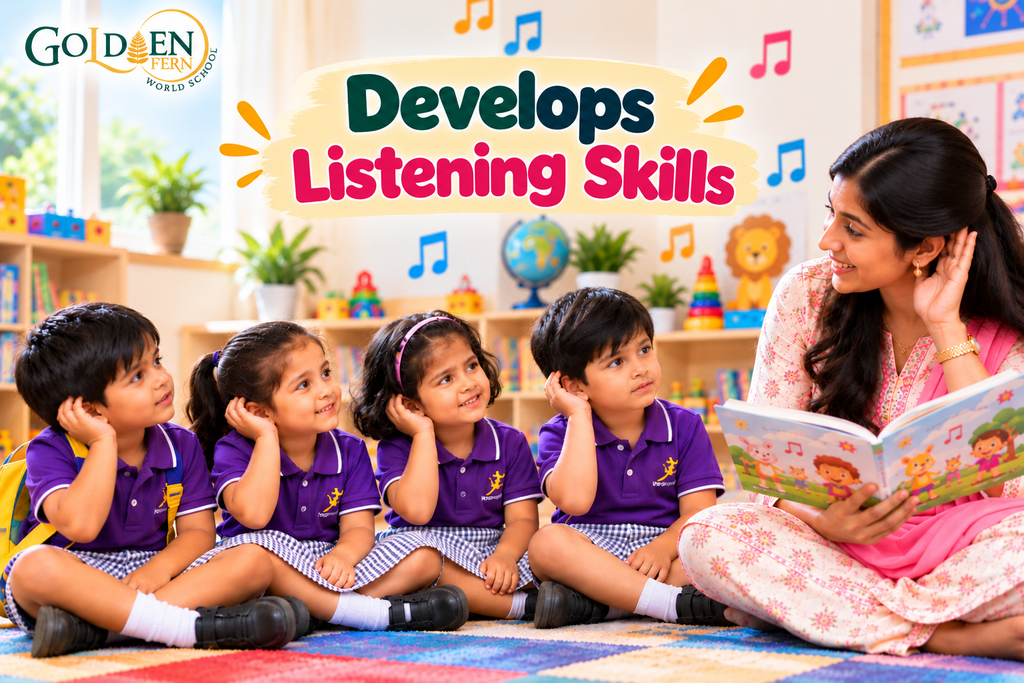
Children need good listening skills to understand instructions and communicate with others.
During a rhyme, children listen for words, sounds, pauses, and changes in rhythm.
Teachers can also stop a familiar song and allow children to complete the missing word.
Such activities encourage children to listen carefully and respond.
3. Supports Memory
Children often remember songs very easily.
The combination of rhythm, repetition, and words can make simple information easier to recall.
Teachers can use songs to introduce:
- Numbers
- Letters
- Colours
- Shapes
- Body parts
- Days of the week
- Classroom routines
Learning through songs can make these concepts more familiar to young children.
4. Builds Awareness of Sounds
Rhymes expose children to different sounds in spoken language.
Children may begin to notice when words have similar sounds or endings.
For example, when a teacher uses a simple rhyming activity, children can listen carefully and identify words that sound alike.
This type of activity can support early language and literacy development.
5. Encourages Children to Speak
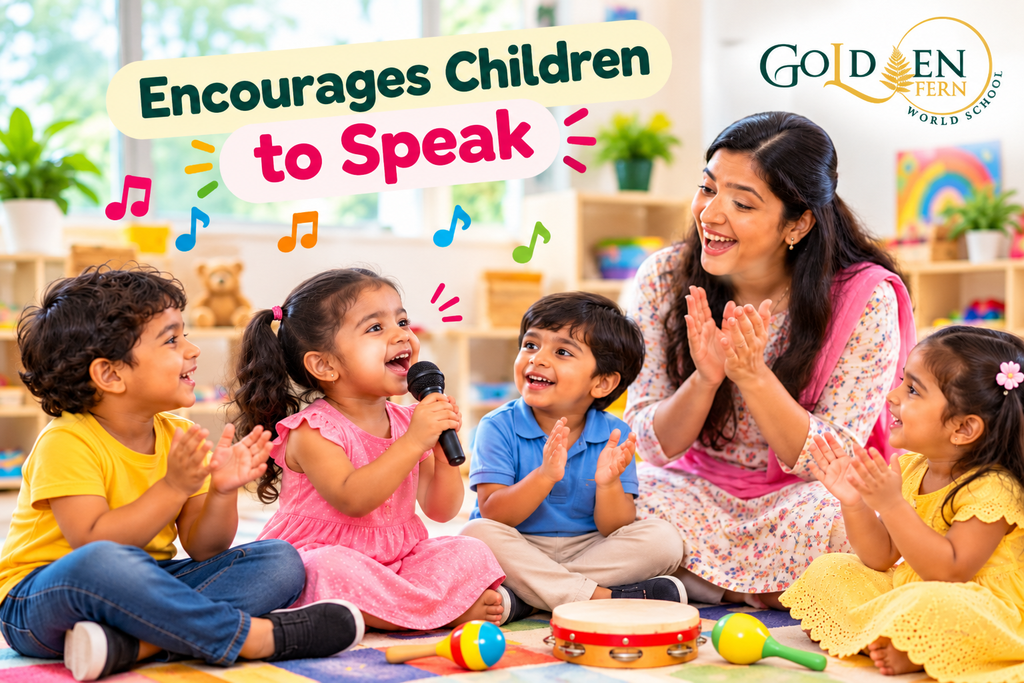
Music gives children regular opportunities to use their voices.
A shy child may first listen to the group. Later, the child may repeat one word or join in with a familiar line.
There is less pressure because everyone is participating together.
With regular opportunities, children can become more comfortable using words and sounds.
6. Improves Body Coordination
Action songs combine listening with movement.
Children may clap, jump, march, turn, stretch, or move their hands while following a song.
They need to listen to the instructions and coordinate their movements.
These activities can make music a useful part of physical and movement-based learning.
7. Encourages Group Participation
Music can bring children together.
When children sing as a group, they follow a shared rhythm and participate in the same activity.
They also learn to watch others, follow instructions, and take part with their classmates.
Group songs can therefore create opportunities for social interaction.
8. Builds Confidence
Some children may hesitate to speak or participate in front of others.
Group songs provide a gentle way to become involved.
Children can start by clapping or performing simple actions. Later, they may begin singing along.
Teachers can allow children to participate at their own comfort level.
This can create a positive classroom experience.
9. Encourages Creativity
Music does not always need fixed movements.
Teachers can ask children to create their own actions for a song.
For example, children can decide how they would move like a bird, butterfly, rabbit, or elephant.
Different children may create different movements.
This gives children opportunities to use imagination and express their ideas.
10. Supports Early Maths Learning
Music can also be connected with basic mathematical concepts.
Children can count while singing or perform a particular action a certain number of times.
For example, children can clap five times while counting from one to five.
Teachers can also create simple sound patterns such as:
Clap – Tap – Clap – Tap
Children can listen to the pattern and repeat it.
This makes early number and pattern activities more interactive.
11. Makes Classroom Routines Interesting
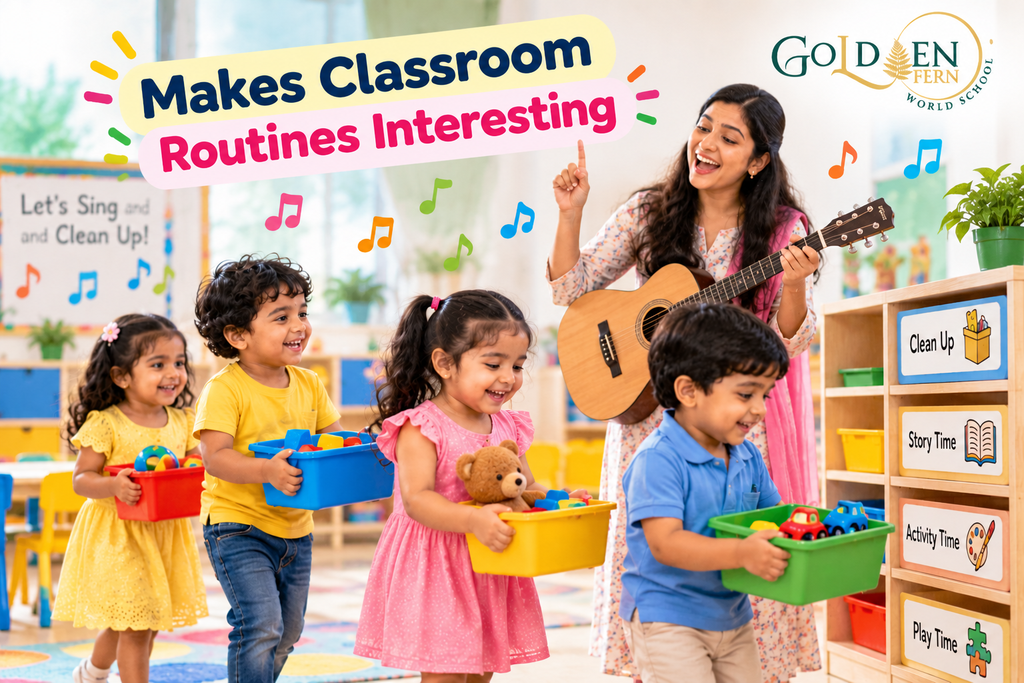
Songs can become useful signals during the school day.
A teacher can use one song for cleaning up and another for moving to a new activity.
After hearing the same song regularly, children may begin to understand what they need to do next.
This can make transitions between activities smoother and more enjoyable.
12. Supports Emotional Expression
Music can create different feelings and moods.
An energetic song can encourage children to move and play. A gentle song can help create a quieter atmosphere.
Children can also use movements and facial expressions to respond to music.
Teachers can ask simple questions about how the music makes them feel.
This can encourage children to talk about emotions.
13. Connects Learning With Play
Young children learn through play and exploration.
Music fits naturally into this type of learning.
A teacher can combine a song with pictures, toys, storytelling, movement, or simple classroom objects.
For example, after singing an animal song, children can identify animal pictures and imitate the animals.
One song can therefore lead to several learning activities.
14. Makes Repetition Enjoyable
Repetition is an important part of early learning.
Children may enjoy hearing the same song many times.
Teachers can use a familiar song in different ways.
One day, children may learn the words. Another day, they may practise the actions. Later, the teacher can ask questions related to the song.
This allows children to revisit an idea without making the activity feel repetitive.
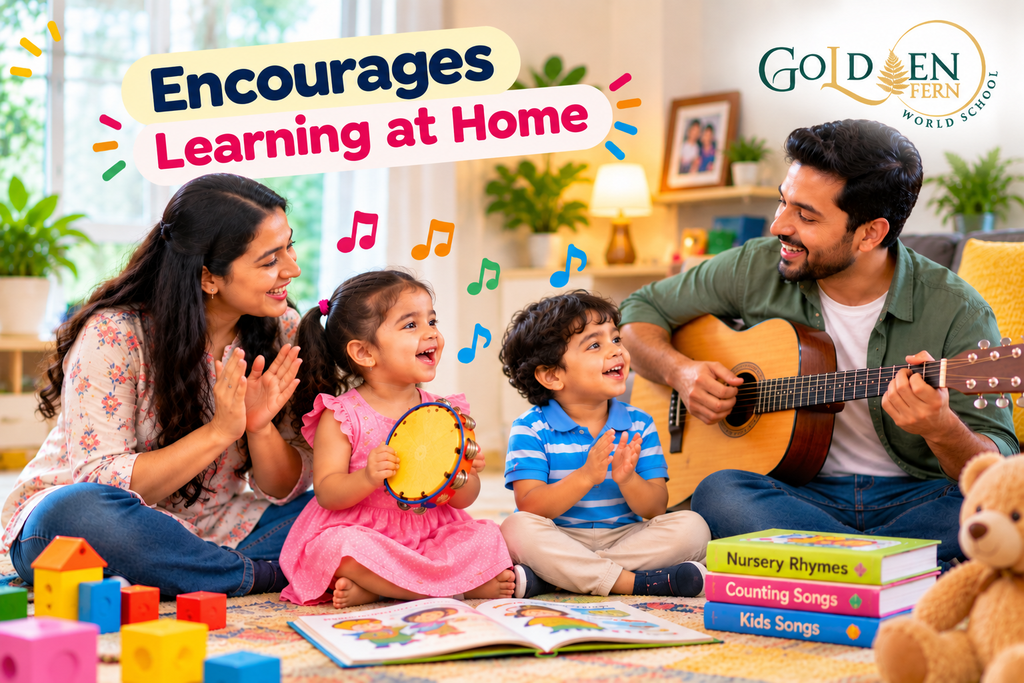
15. Encourages Learning at Home
Music and rhymes can easily continue outside school.
Parents can sing simple songs with their children, clap along with rhymes, or practise counting through songs.
These activities do not require special equipment.
A short song during playtime or family time can create another opportunity for children to communicate and learn.
How Teachers Can Use Music and Rhymes
Teachers can make music activities more meaningful by keeping them simple and age-appropriate.
Some useful approaches include:
- Choose short songs.
- Use simple vocabulary.
- Add easy actions.
- Repeat familiar songs.
- Give children time to respond.
- Connect songs with classroom topics.
- Allow children to create movements.
- Include both active and quiet music.
- Encourage participation without forcing performance.
- Combine music with play and hands-on activities.
The aim is not perfect singing. The aim is to give children opportunities to listen, participate, communicate, move, and enjoy learning.
Music and Rhymes Should Be Part of Balanced Learning
Music is only one part of early childhood education.
Young children also need storytelling, drawing, outdoor play, group activities, free play, conversations, art, nature exploration, and hands-on experiences.
Combining different activities gives children more ways to understand the world around them.
For example, a teacher can introduce colours through a song, show children colourful objects, and then conduct a simple art activity.
This creates a connected learning experience.
Conclusion
Music and rhymes can make early childhood learning more active and enjoyable.
Songs can introduce vocabulary. Rhymes can help children notice sounds. Action songs can encourage movement. Group music can create opportunities for communication and social interaction.
With regular and meaningful use, music can become a valuable part of a pre-primary learning environment.
For young children, learning does not always have to happen through formal lessons. A simple song, a familiar rhyme, and a little movement can create a memorable learning experience.
At Golden Fern World School, playful learning experiences can help children explore new ideas, express themselves, and develop important skills during their early years.