
Uncategorized
Pre-Primary School Age: What Is the Right Age to Start?

One of the first questions parents ask before choosing a school is, “When should my child start pre-primary education?”
It may seem like a simple question, but there is no single age that suits every child. Two children of the same age can have very different levels of confidence, communication, independence, and interest in new surroundings.
For many children, the pre primary school age journey begins somewhere between 2.5 and 5 years. However, the child’s comfort and readiness should be considered along with their age.
Why Does the Starting Age Matter?
The first school experience can influence how a child feels about learning. If the environment matches the child’s developmental stage, school can become something they look forward to rather than something they feel pressured about.
Young children learn differently from older students. They understand new ideas through experiences, conversations, movement, pictures, stories, games, and hands-on activities.
That is why choosing the right time is less about asking, “Is my child old enough?” and more about asking, “Is my child becoming ready for a new environment?”
What Is the Usual Pre-Primary School Age?
There is no universal starting age for every child or every school. Different schools may divide their early-years programs differently.
A general progression may look like this:
Around 2.5 to 3 Years
At this stage, children are beginning to explore life outside the home. They may enjoy songs, simple stories, toys, colours, movement, and short group activities.
The early classroom experience can focus on helping children:
- Become comfortable with new people
- Experience a simple daily routine
- Express basic needs
- Play alongside other children
- Explore through age-appropriate activities
- Develop coordination through movement and creative work
The purpose is not to make children sit and study for long periods.
Around 3 to 4 Years
Children usually start showing greater interest in conversation, pretend play, stories, drawing, and group activities.
A classroom at this stage can introduce concepts through:
- Picture-based activities
- Story sessions
- Music and rhymes
- Colour and shape activities
- Simple counting experiences
- Art and craft
- Building and sorting games
- Conversation activities
These experiences allow children to learn while remaining actively involved.
Around 4 to 5 Years
Children may become more comfortable with classroom routines and begin showing stronger interest in letters, sounds, numbers, patterns, and simple problem-solving.
Activities can gradually introduce:
- Early reading awareness
- Number understanding
- Pencil-control activities
- Vocabulary development
- Pattern recognition
- Creative expression
- Independent classroom tasks
- Group participation
The learning process should still feel enjoyable and manageable for the child’s age.
How Can Parents Recognise School Readiness?
A child’s birthday alone cannot tell you whether they are ready for school. Everyday behaviour can provide useful clues.
Your Child Can Express Basic Needs
If your child can communicate simple needs, ask for help, or tell you when something is wrong, adjusting to a classroom may become easier.
Your Child Shows Interest in New Things
Does your child ask questions? Do they enjoy looking at books, exploring objects, or trying unfamiliar activities?
Curiosity can be a positive sign that the child is ready for new experiences.
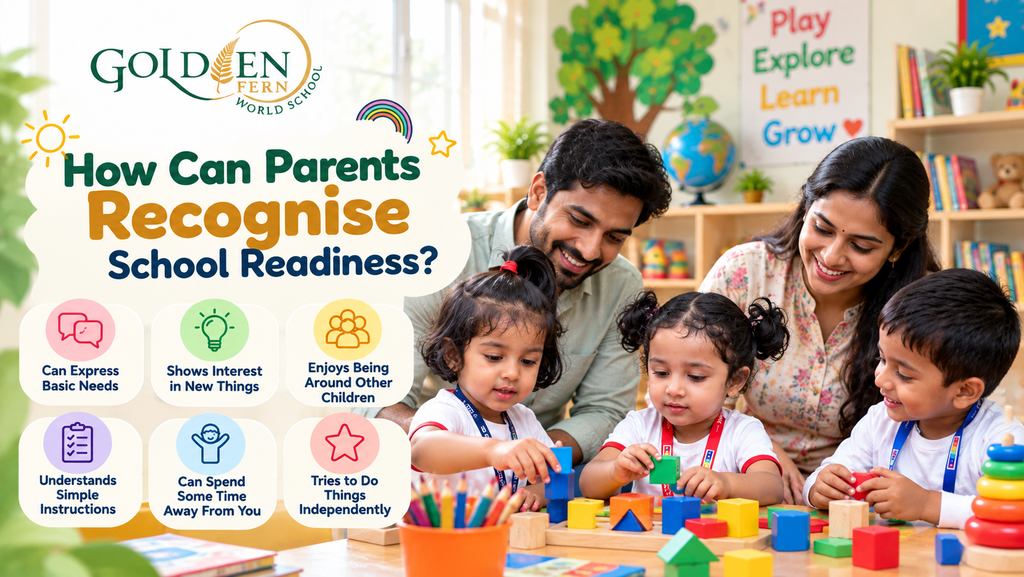
Your Child Can Spend Some Time Away From You
A child does not need to be completely comfortable separating from parents immediately. However, being able to stay with another trusted adult for a short period can help with the transition.
Your Child Understands Simple Instructions
Following everyday instructions such as putting something away, coming when called, or joining an activity can help children participate in classroom routines.
Your Child Enjoys Being Around Other Children
Interest in playing, talking, or observing other children can indicate growing social readiness.
Your Child Is Trying to Do Things Independently
Small actions matter. Trying to eat independently, put toys away, wash hands, or carry personal belongings can gradually build confidence.
Does a Child Need to Know ABCs Before Starting?
Not necessarily.
Parents sometimes feel that their child should already recognise letters, numbers, or words before entering pre-primary school. But early education is also where children are introduced to these concepts.
What matters more is creating a positive learning experience.
A child who is curious, willing to participate, and comfortable exploring can gradually develop academic skills through suitable classroom experiences.
What If My Child Is Not Ready at the Same Age as Others?
Every child follows an individual developmental path.
One child may happily enter a classroom at three, while another may need more time to become comfortable with separation or group activities. Comparing children can create unnecessary pressure for both parents and children.
Instead, observe your child’s behaviour and discuss your concerns with the school.
A supportive school can help parents understand how the child may transition into the classroom and what simple steps can be followed at home.
How Can Parents Make the Transition Easier?
Starting school is a new experience. A little preparation at home can make the first few weeks smoother.
Create a Predictable Morning Routine
Try to keep waking, eating, getting ready, and leaving-home times reasonably consistent. Familiar routines can make mornings less stressful.
Give Small Choices
Let your child choose between two suitable clothes, select a water bottle, or decide which story to read before bedtime. Small choices can encourage independence.
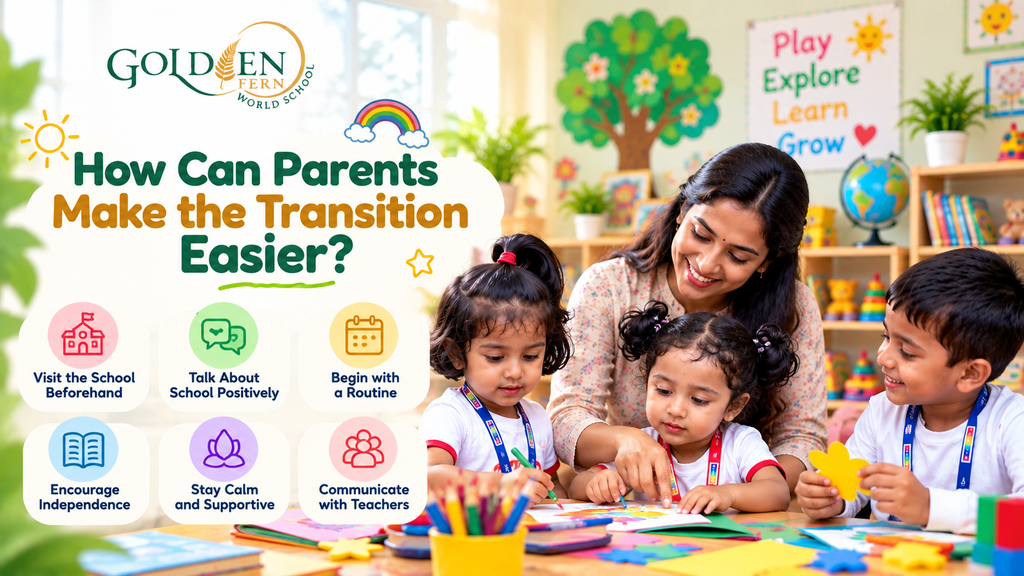
Practise Simple Self-Help Skills
Encourage your child to try everyday tasks rather than doing everything for them. These small habits can be useful in a classroom.
Talk About School Naturally
Speak positively about school without making unrealistic promises. Tell your child that they may meet teachers, see other children, play, listen to stories, and try new activities.
Avoid Creating Fear
Statements such as “If you don’t listen, your teacher will punish you” can make children nervous about school.
Instead, help them see school as a new place where they can explore and learn.
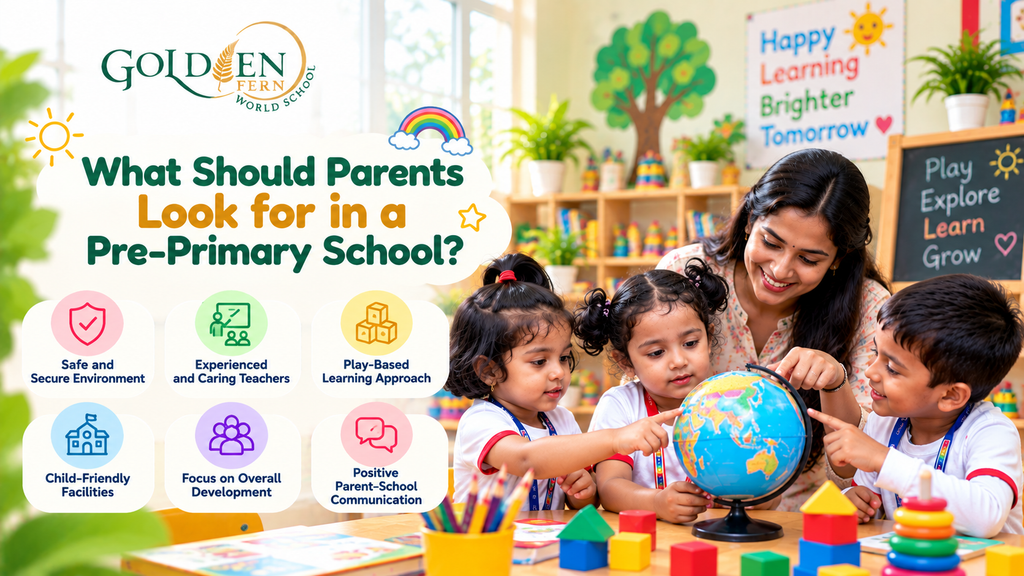
What Should Parents Look for in a Pre-Primary School?
Choosing a school involves more than checking the distance from home.
Parents should look closely at the atmosphere in the classroom. Are children comfortable? Do teachers speak patiently? Are activities suitable for the children’s age? Is there enough opportunity for movement and creativity?
It is also useful to consider:
- Classroom safety
- Teacher-child interaction
- Cleanliness and hygiene
- Age-appropriate learning activities
- Opportunities for creative expression
- Social interaction
- Outdoor or physical activities
- Communication between school and parents
- Overall emotional environment
A warm environment can make a significant difference to a child’s first experience of school.
Learning Should Feel Natural in the Early Years
Pre-primary education should not be treated as a smaller version of higher classes.
Young children need opportunities to touch, move, speak, imagine, create, observe, and experiment.
A counting activity might involve arranging objects. A language activity might begin with a story. A social lesson might happen while children work together on a simple task.
When learning is connected to experiences that children understand, participation becomes more natural.
How Golden Fern World School Supports Early Learning
At Golden Fern World School, we believe the early years should give children a comfortable beginning to their educational journey.
Our approach focuses on creating opportunities for children to learn through meaningful activities, creativity, interaction, movement, and exploration.
Rather than expecting every child to learn in exactly the same way, early education can give children space to develop confidence at their own pace.
The aim is to help children gradually become comfortable with learning, communication, friendship, classroom routines, and independent thinking.
Final Thoughts
So, what is the right pre primary school age?
There is no magic number.
For many children, the early-years journey may begin between 2.5 and 5 years, but the decision should also consider the child’s personality, communication, independence, social comfort, and willingness to explore a new environment.
Parents do not need to rush the process or compare their child with someone else’s child.
The better goal is to find the right combination of age, readiness, and a supportive learning environment.
With the right beginning, school can become a place where children feel comfortable asking questions, making friends, trying new things, and discovering the joy of learning.
Frequently Asked Questions
What is the common pre-primary school age?
Many children enter pre-primary programs between 2.5 and 5 years. The exact age depends on the child’s readiness and the structure followed by the school.
Is three years too early to start pre-primary education?
Not necessarily. Some children are comfortable starting around three, while others may need additional time. Parents should consider the child’s overall readiness rather than age alone.
Should my child know the alphabet before joining?
No. Children can develop early literacy skills as part of their pre-primary learning experience. Prior knowledge of the alphabet is not the only indicator of school readiness.
How do I know whether my child is ready?
Look for signs such as basic communication, curiosity, interest in other children, ability to follow simple instructions, and growing independence.
What is more important: age or readiness?
Both matter, but readiness can provide important information about how comfortably a child may adjust to a new school environment.
How can parents prepare children before school begins?
Simple routines, self-help activities, positive conversations about school, and opportunities to interact with other children can help make the transition easier.
SEO Details
SEO Title: Pre-Primary School Age: What Is the Right Age to Start?
Focus Keyphrase: pre primary school age
Slug: pre-primary-school-age
Meta Description: Discover the right pre-primary school age, signs of school readiness, preparation tips, and how parents can choose a supportive early learning environment.
Secondary Keywords:
right age for pre-primary school, preschool starting age, pre-primary education, school readiness, early childhood learning, preschool age, child school readiness
Suggested Featured Image Alt Text:
Pre-primary school age and school readiness for young children