
Uncategorized
10 Simple Educational Activities for Pre-Primary Children

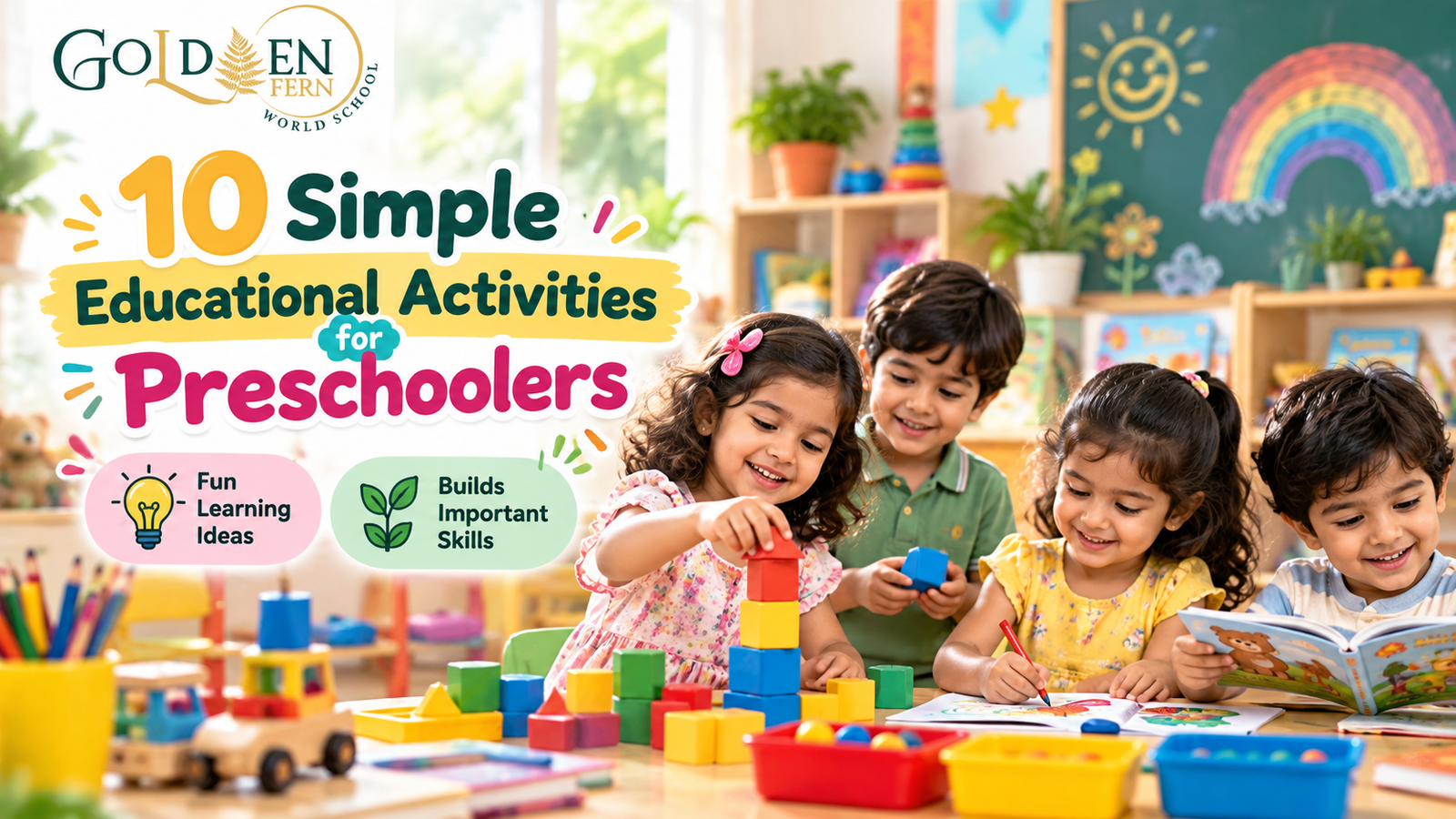
Children are naturally curious. They learn by touching, watching, asking questions, and trying new things. For young learners, a simple game or activity can become a valuable learning experience.
The right educational activities for preschoolers can help children develop communication, creativity, concentration, early number skills, and confidence without making learning feel difficult.
Here are 10 easy activities that parents and teachers can introduce during the early years.
1. Find and Sort Colours
How to Do It
Collect a few colourful objects such as blocks, crayons, balls, or paper pieces. Place them together and ask children to group objects that have the same colour.
Once they understand the activity, make it more interesting by asking them to search for objects of a particular colour around the room.
Skills Children Develop
- Colour identification
- Observation
- Concentration
- Sorting ability
- Hand coordination
This simple game turns colour learning into an enjoyable hands-on experience.
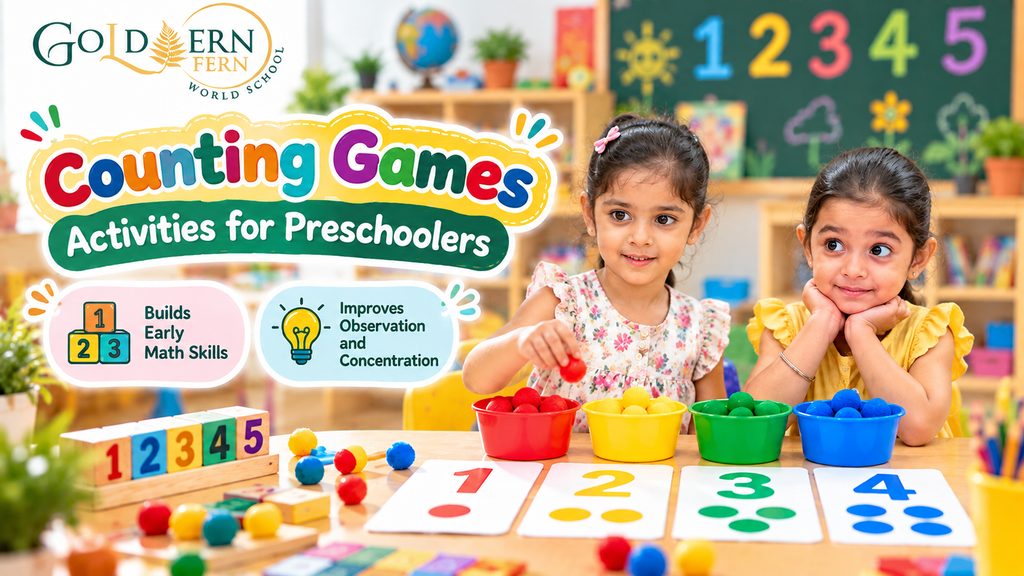
2. Count Things Around You
How to Do It
Children can practise counting with objects they already know. Give them a small collection of toys, pencils, blocks, or fruits and ask them to count each item.
You can then ask simple questions such as, “Can you give me three blocks?” or “How many toys do you have?”
Skills Children Develop
- Number recognition
- Counting
- Memory
- Basic mathematical thinking
- Concentration
Using familiar objects makes early number learning easier to understand.
3. Create a Story from Pictures
How to Do It
Choose three or four simple pictures. They can show an animal, a child, a house, a tree, or any familiar object.
Ask the child to look at the pictures and describe what might be happening. Encourage them to connect the pictures and create their own little story.
Skills Children Develop
- Vocabulary
- Speaking
- Listening
- Imagination
- Creative thinking
There is no single correct story. The main goal is to encourage children to express their ideas.
4. Explore Nature
How to Do It
Take children outside for a short observation walk. Encourage them to notice leaves, flowers, birds, insects, stones, clouds, and other things around them.
Ask questions such as:
- What do you see?
- What colour is the flower?
- Is the leaf big or small?
- Can you hear a bird?
Skills Children Develop
- Observation
- Curiosity
- Environmental awareness
- Vocabulary
- Basic scientific thinking
A short outdoor activity can introduce children to the world of nature in a natural way.
5. Match Letters with Pictures
How to Do It
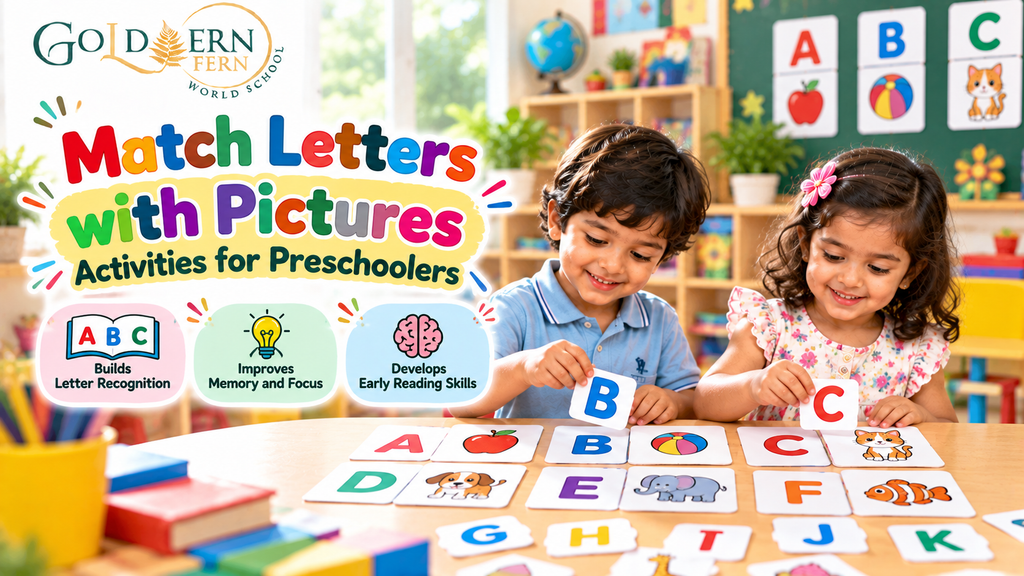
Prepare cards containing simple letters and familiar pictures. For example, place the letter B beside pictures of a ball, banana, or bird.
Let children match the letter with pictures that begin with the same sound.
Skills Children Develop
- Letter recognition
- Sound awareness
- Vocabulary
- Memory
- Early reading readiness
Keep the activity short and playful so children remain interested.
6. Build Something with Blocks
How to Do It
Give children building blocks and allow them to create whatever they want. You can suggest ideas such as a house, bridge, tower, or small vehicle.
Instead of correcting their designs, ask questions about what they are building and how they made it.
Skills Children Develop
- Creativity
- Problem-solving
- Hand control
- Spatial understanding
- Planning
Building activities allow children to experiment and learn from their own attempts.
7. Make a Simple Art Project
How to Do It
Give children paper, crayons, pencils, or child-safe craft materials. Choose a simple theme such as “My Family,” “My Garden,” or “My Favourite Animal.”
Let children decide how they want to complete their artwork.
Skills Children Develop
- Creativity
- Self-expression
- Fine motor control
- Colour awareness
- Confidence
Children do not need to create perfect drawings. The value comes from expressing their own ideas.
8. Go on a Shape Hunt
How to Do It
Introduce basic shapes such as circles, squares, triangles, and rectangles.
Then ask children to find these shapes in their surroundings. A clock may look like a circle, a window may look like a rectangle, and a sign may have a different shape.
Skills Children Develop
- Shape recognition
- Visual awareness
- Observation
- Early mathematics
- Classification
A shape hunt can turn an ordinary classroom into an exciting learning space.
9. Try a Simple Water Activity
How to Do It
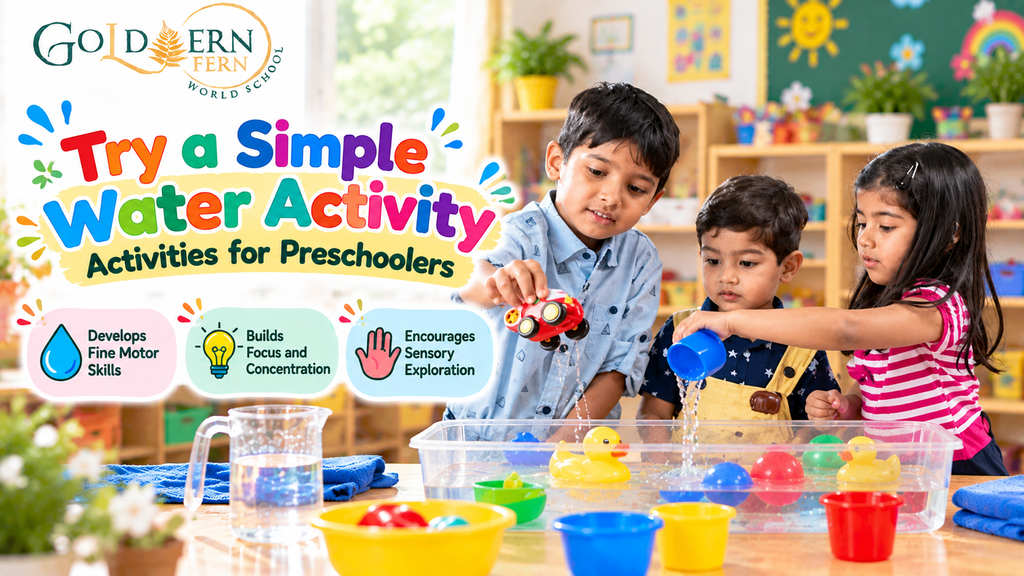
Place two or three safe containers on a table. Give children a cup or spoon and let them move water from one container to another.
An adult should supervise the activity throughout.
You can also ask which container appears to hold more or less water.
Skills Children Develop
- Hand-eye coordination
- Fine motor skills
- Concentration
- Comparison
- Early measurement concepts
Children can learn simple ideas about quantity while experimenting with water.
10. Enjoy Pretend Play
How to Do It
Create a simple pretend-play situation such as a shop, hospital, restaurant, classroom, or home.
Give children different roles and allow them to interact with one another. For example, one child can become the shopkeeper while another becomes the customer.
Skills Children Develop
- Communication
- Social interaction
- Imagination
- Cooperation
- Confidence
Pretend play helps children understand everyday situations while giving them opportunities to use language.
How These Activities Support Early Learning
Learning Through Everyday Experiences
Young children do not need complicated materials to learn. A collection of toys can become a counting activity, while leaves collected during an outdoor walk can become part of a nature lesson.
When children actively participate, they can connect new ideas with things they already understand.
Developing Social and Communication Skills
Many activities become more meaningful when children work together. Talking, sharing materials, taking turns, and listening to others help children gradually develop important social habits.
Simple group activities can also give shy children opportunities to participate at their own pace.
Encouraging Independent Thinking
Children should have opportunities to make small choices during activities. They can choose colours for an artwork, decide what to build with blocks, or create their own story from pictures.
These small decisions can encourage independence and confidence.
How Parents Can Continue Learning at Home
Parents do not need expensive educational materials to support early learning.
Simple everyday moments can become learning opportunities. Children can count fruits while helping in the kitchen, identify colours while arranging toys, listen to stories before bedtime, or observe plants during an evening walk.
The key is to keep activities enjoyable and suitable for the child’s age.
Creating a Positive Pre-Primary Learning Environment
A good pre-primary environment gives children space to explore while providing appropriate guidance.
Teachers can combine stories, movement, games, art, music, outdoor exploration, and hands-on activities to introduce new concepts. Children should feel comfortable asking questions, making mistakes, and trying again.
When learning feels enjoyable, children can gradually develop curiosity and a positive attitude toward new experiences.
Conclusion
Early learning can happen through simple moments every day. Colour sorting, counting, storytelling, nature exploration, building, art, shape games, water play, and pretend play can all provide valuable learning experiences.
The purpose of these educational activities for preschoolers is not to make young children study for long hours. Instead, they create opportunities for children to discover ideas through participation, curiosity, and play.
At Golden Fern World School, we believe that the early years should provide children with opportunities to explore, communicate, create, and learn with confidence. A thoughtful pre-primary learning environment can help children build a strong foundation for the years ahead.