
Uncategorized
Importance of Developing Good Habits in Early Childhood

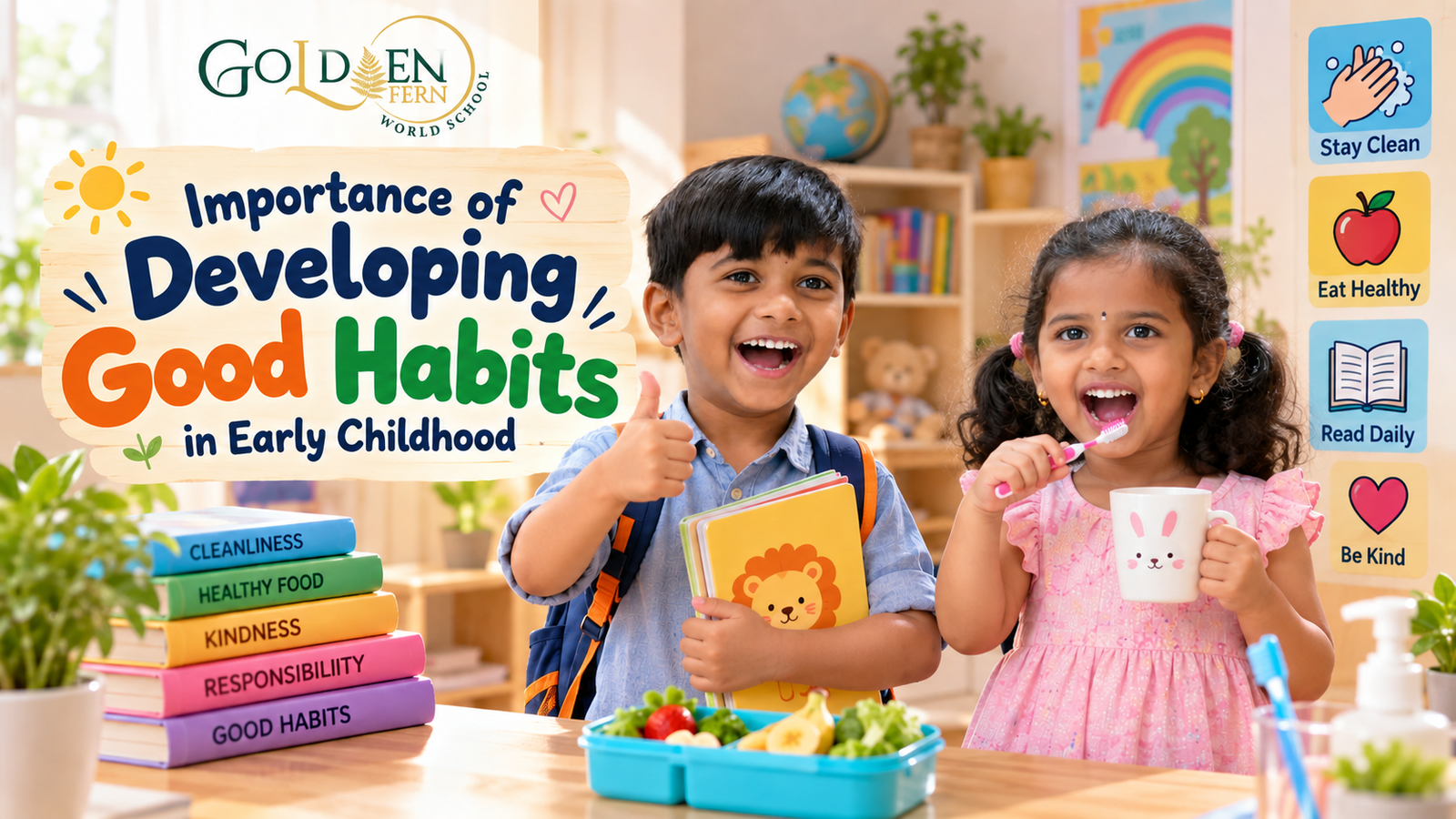
The early years of childhood are filled with small discoveries. A child learns how to hold a pencil, speak with friends, put away a toy, wash their hands, listen to a story, and complete simple tasks. These everyday moments may look ordinary, but they can gradually shape the way a child behaves and learns.
This is why developing good habits for children should begin during the early years. Young children learn best when they see, practise, repeat, and experience something regularly. Instead of simply telling children what they should do, parents and teachers can create opportunities for them to practise positive habits as part of their everyday routine.
At Golden Fern World School, we believe that early education should support more than classroom learning. Children also need opportunities to become independent, caring, confident, responsible, and comfortable with everyday routines.
What Are Good Habits for Children?
Good habits are simple behaviours that children practise regularly and gradually become comfortable doing on their own.
For a young child, a good habit could be something as simple as:
- Washing hands before eating
- Keeping toys in their place
- Saying “please” and “thank you”
- Listening when someone speaks
- Drinking water regularly
- Choosing healthy food
- Taking care of books and school materials
- Waiting for a turn
- Helping with small tasks
- Following a bedtime routine
Children do not need to master all these habits at once. Each child develops differently. The important thing is to introduce suitable habits slowly and give children enough time to practise them.
Why Should Good Habits Start Early?
Childhood is a time when routines are constantly being formed. A child who repeatedly follows a simple routine begins to understand what comes next and what is expected.
For example, imagine a child who finishes playing and then puts the toys back into a basket every day. Initially, an adult may have to remind the child. After many repetitions, the child may begin doing it without being asked.
That small action teaches something much bigger: responsibility.
In the same way, washing hands can introduce cleanliness, waiting for a turn can teach patience, and helping a friend can develop kindness.
Good habits therefore become opportunities for children to learn important life skills through ordinary activities.
1. Teach Children to Take Care of Their Personal Hygiene
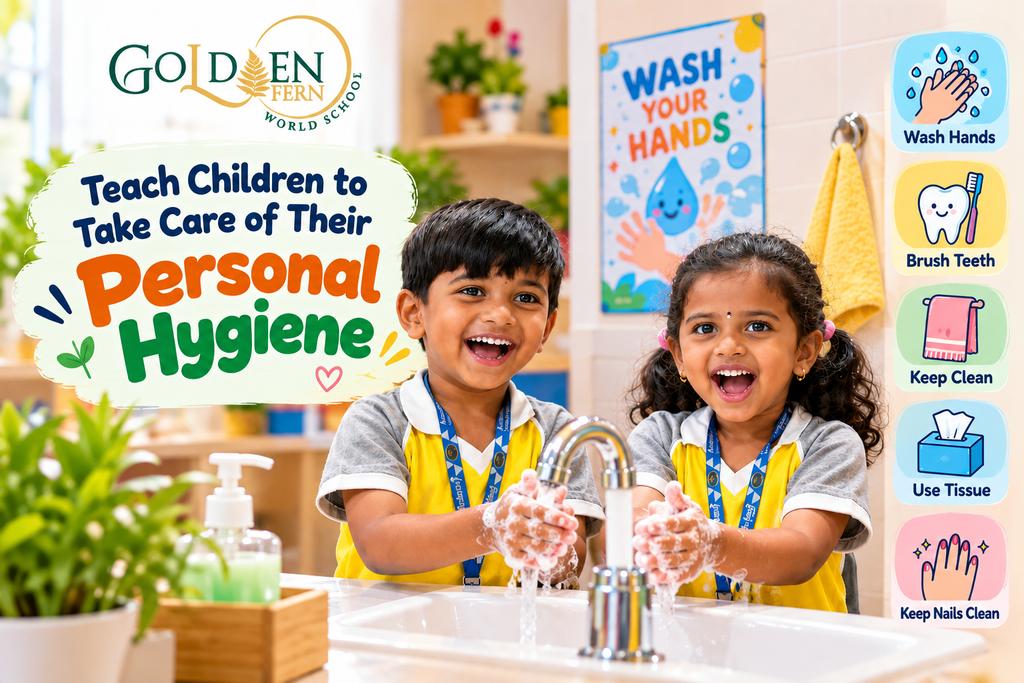
Personal hygiene can be introduced through simple daily activities.
Children can learn to:
- Wash their hands properly
- Brush their teeth regularly
- Keep their nails clean
- Cover their mouth while coughing or sneezing
- Use a tissue when necessary
- Keep their personal belongings neat
Instead of giving long instructions, adults can demonstrate the action and allow children to copy it.
For example, parents can make handwashing part of the routine before meals. At school, teachers can turn hygiene routines into a regular part of the day’s activities.
When the same action is repeated in a relaxed way, children gradually become familiar with it.
2. Create a Simple Morning Routine
Mornings can become stressful when children do not know what they need to do.
A simple routine can make the start of the day smoother.
For example:
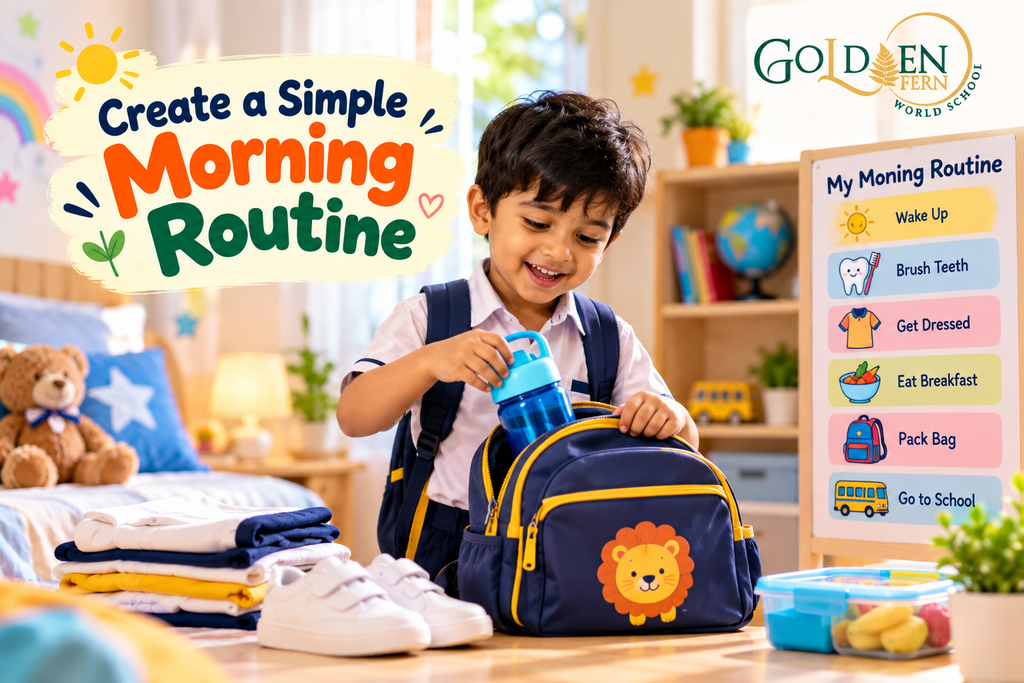
Wake Up → Brush → Get Ready → Eat Breakfast → Pack the Bag → Leave for School
Parents can use pictures or simple reminders for younger children. Instead of completing everything for them, adults can allow children to handle small tasks themselves.
A child may start by choosing their clothes or placing their water bottle in the school bag. These little responsibilities can gradually build independence.
3. Encourage Children to Put Things Back
Young children naturally enjoy taking things out while playing. Learning to put things back is another skill they can practise.
After an activity, parents or teachers can say:
“Let’s give every toy its own home.”
This makes cleaning up feel like part of the game rather than a punishment.
Children can sort:
- Blocks into a box
- Books onto a shelf
- Crayons into a container
- Toys into baskets
Over time, children can begin recognising where their belongings belong.
This simple habit can also help them become more organised.
4. Develop Healthy Food Habits
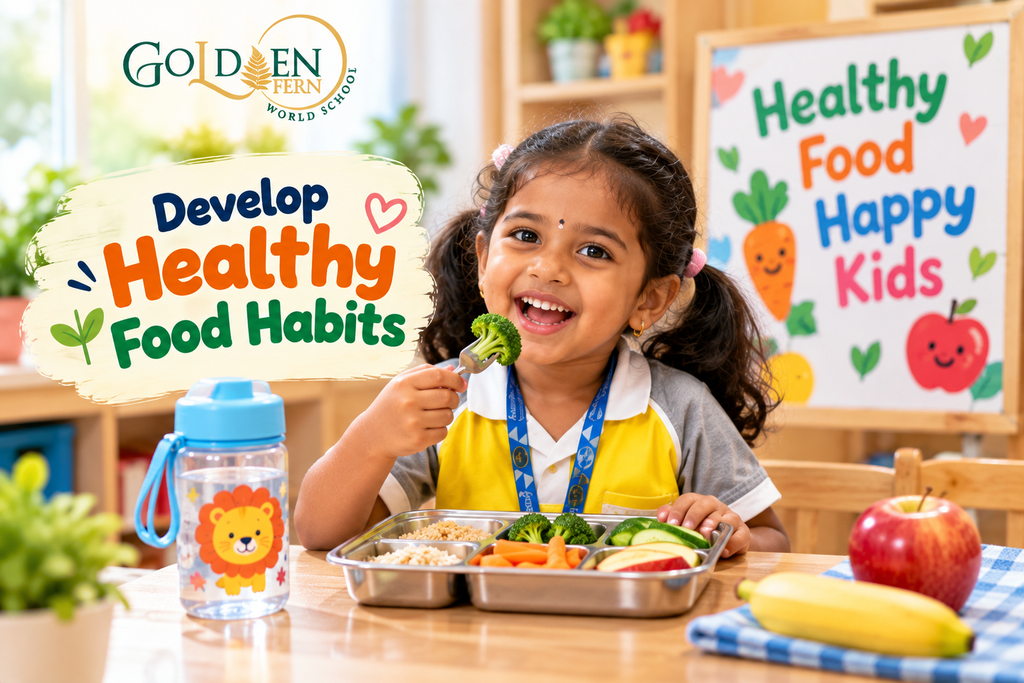
Food habits can be introduced through positive experiences rather than pressure.
Children can be encouraged to explore different foods, including fruits, vegetables, grains, and other nutritious choices suitable for their age.
Parents can involve children in simple activities such as:
- Washing fruits
- Choosing between two healthy snack options
- Arranging food on a plate
- Filling their water bottle
- Sitting at the table during meals
The purpose is to help children become comfortable with healthy choices rather than turning mealtimes into a struggle.
5. Help Children Become Better Listeners
Listening is one of the most useful habits a child can develop.
A child who listens carefully can understand instructions, participate in activities, and communicate more effectively with others.
Teachers and parents can practise listening through:
Story Listening
Read a short story and ask the child what happened first.
Sound Games
Make different sounds and ask children to identify them.
Follow-the-Instruction Games
Give two simple instructions, such as:
“Pick up the red block and place it on the table.”
Rhyme Activities
Pause before the final word of a familiar rhyme and allow children to complete it.
These activities make listening enjoyable while giving children regular opportunities to concentrate.
6. Teach Children to Wait for Their Turn
Waiting is not always easy for young children. They may want to speak, play, or receive something immediately.
Simple group activities can help children understand the idea of taking turns.
For example, during a ball game, each child gets an opportunity to throw the ball. During a classroom discussion, children can wait while another child is speaking.
Teachers can use phrases such as:
“First your friend, then you.”
Repeated experiences canhelp children understand that everyone deserves an opportunity.
7. Encourage Kind Words and Helpful Actions
Children learn social habits through everyday interactions.
Simple expressions such as:
- “Please”
- “Thank you”
- “Can I play?”
- “Are you okay?”
- “Can I help you?”
can help children communicate respectfully.
Teachers can also create situations where children work together. For example, two children can carry a box together or help arrange classroom materials.
Such experiences show children that being helpful and respectful is part of being a good friend.
8. Make Reading a Regular Part of the Day
A reading habit does not require children to read long books independently.
For young children, reading can simply mean spending a few minutes with a picture book and talking about what they see.
Parents can ask:
“What do you think is happening here?”
“Which character do you like?”
“What might happen next?”
This turns reading into a conversation.
At school, storytelling, picture books, puppe
Final Thoughts
Developing good habits in early childhood is a gradual process. Children learn through simple routines, regular practice, and positive encouragement.
Habits such as personal hygiene, healthy eating, listening, taking turns, keeping things organised, using kind words, and reading can become meaningful parts of a child’s daily life.
Parents and teachers can support this process by being patient and showing children how to practise these habits. Small steps can make a big difference when children are given time and encouragement.
At Golden Fern World School, we believe that early education should help children grow not only as learners but also as caring, confident, independent, and responsible individuals. By building positive habits from an early age, we can help children develop skills that support them throughout their learning journey.