
Uncategorized
How Pre-Primary Education Supports Emotional Development

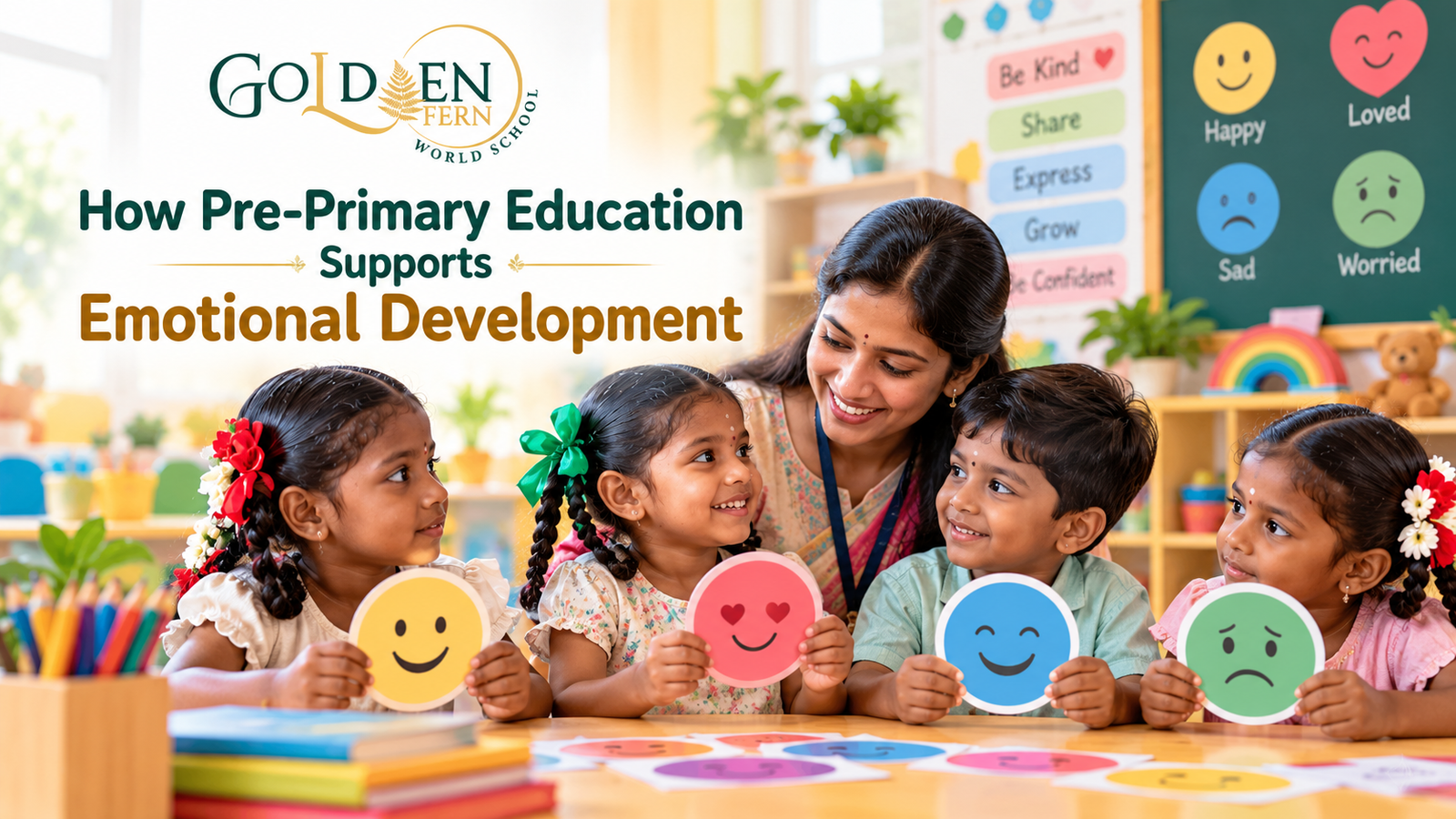
Early childhood is an important stage in every child’s life. During these years, children learn more than letters, numbers, and basic skills. They also learn how to understand their feelings, express themselves, and build relationships with others.
Emotional development in children helps them feel confident, safe, and comfortable in different situations. A good pre-primary school provides children with a caring environment where they can slowly develop these important skills.
At Golden Fern World School, we believe that children learn best when they feel happy, respected, and supported. Our pre-primary learning environment encourages children to understand their emotions while enjoying everyday activities.
What Is Emotional Development in Children?
Emotional development is the process through which children learn to understand and manage their feelings.
Young children may experience many emotions during the day. They can feel happy, excited, nervous, angry, sad, or disappointed. At first, they may not know how to express these feelings clearly.
With gentle guidance, children can learn to:
- Recognise different emotions
- Express their feelings in simple ways
- Understand how others may feel
- Stay calm in difficult situations
- Build confidence
- Develop positive relationships
- Ask for help when needed
These skills become useful both inside and outside the classroom.
Why Emotional Development Is Important in Early Childhood
Children who understand their emotions may find it easier to communicate with teachers and classmates. They can also learn how to respond to everyday challenges.
For example, a child may feel upset when another child takes a favourite toy. Instead of crying or reacting immediately, the child can gradually learn to say, “I was playing with it.”
This simple change shows emotional growth.
Emotional development also supports learning. When children feel secure and confident, they may be more willing to participate in classroom activities and try something new.
How Pre-Primary Schools Support Emotional Development
A positive school environment gives children many opportunities to develop emotional skills. Everyday classroom experiences can become valuable learning moments.
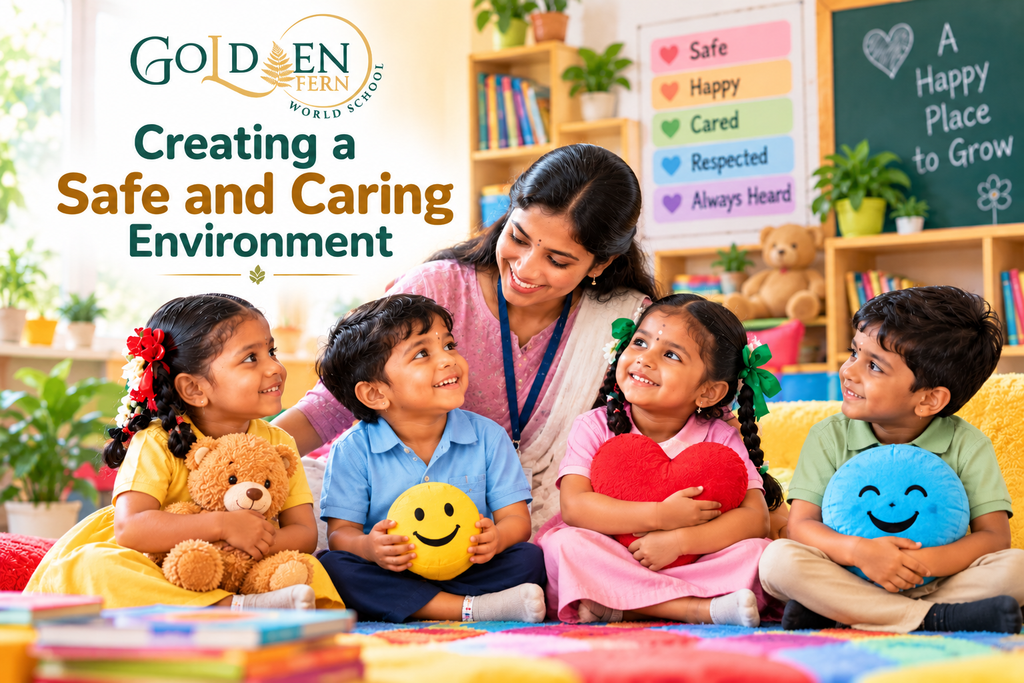
1. Creating a Safe and Caring Environment
Children need to feel safe before they can feel comfortable expressing themselves.
Teachers can create a welcoming classroom by listening to children, speaking kindly, and responding patiently. A warm environment helps children understand that their feelings are important.
When children feel accepted, they may become more comfortable sharing their thoughts and emotions.
2. Helping Children Identify Their Feelings
Young children may sometimes know that they feel uncomfortable but may not know why.
Teachers can use simple words such as happy, sad, angry, scared, excited, and worried. Pictures, stories, songs, and classroom activities can also help children recognise emotions.
For example, a teacher may ask:
“How do you feel today?”
Children can then choose an emotion and explain it in their own words.
This encourages children to become more aware of their feelings.
3. Encouraging Children to Express Emotions
Children should have healthy ways to express their emotions.
Teachers can encourage children to talk about what they are feeling instead of keeping everything inside. Storytelling, drawing, music, role-play, and group conversations can provide simple ways for children to express themselves.
Over time, children can learn that it is okay to have different feelings and that emotions can be communicated in respectful ways.
4. Teaching Children to Manage Difficult Feelings
Children cannot always control what they feel. However, they can slowly learn how to respond to those feelings.
Teachers can introduce simple calming activities, such as:
- Taking deep breaths
- Sitting quietly for a short time
- Talking to a trusted adult
- Listening to calming music
- Drawing or colouring
- Moving to a quiet space
These activities can help children practise self-control in a gentle way.
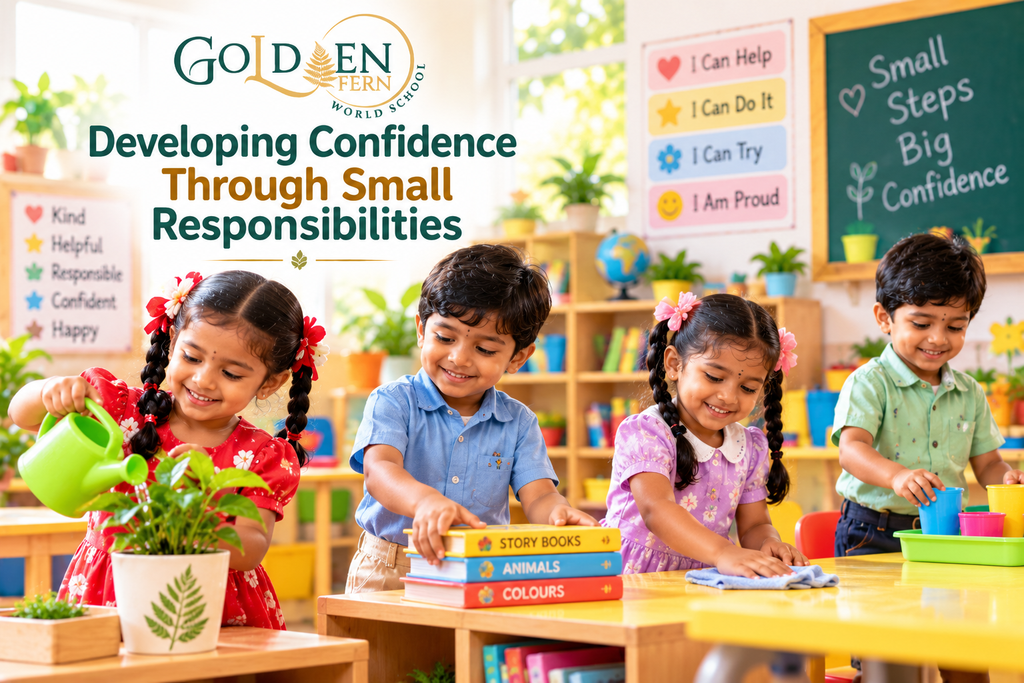
5. Developing Confidence Through Small Responsibilities
Small classroom responsibilities can help children feel capable.
A teacher may ask a child to arrange books, distribute crayons, water a plant, or help clean an activity area.
Such simple tasks can create a feeling of responsibility.
Children may begin to think:
“I can do this by myself.”
This positive feeling can support confidence and independence.
6. Encouraging Positive Friendships
Pre-primary education gives children opportunities to interact with other children.
Through group activities and play, children learn how to share, wait for their turn, listen, cooperate, and solve small disagreements.
These experiences support social and emotional growth.
For example, when children work together to complete a puzzle, they learn that cooperation can make an activity easier and more enjoyable.
7. Using Stories to Teach Emotional Skills
Stories are a simple and enjoyable way to introduce emotional learning.
A story character may feel nervous about trying something new. Another character may feel sad after losing a toy. Children can discuss these situations and think about what the characters could do.
Teachers can ask questions such as:
- “How do you think the character feels?”
- “Why is the character sad?”
- “What could make the character feel better?”
- “What would you do in this situation?”
Such conversations help children understand different emotions.
The Role of Teachers in Emotional Development
Teachers play an important role in helping children develop emotional skills.
A supportive teacher does more than teach classroom lessons. The teacher also observes how children interact, listens to their concerns, and guides them through everyday situations.
When a child feels upset, a teacher can respond calmly and help the child name the emotion. This gives the child an opportunity to understand what happened and learn a better response.
Positive teacher-child relationships can also help children feel more secure at school.
How Play Supports Emotional Development
Play is an important part of pre-primary education.
During free play and group activities, children experience many real-life situations. They may need to share toys, make choices, follow simple rules, or solve disagreements.
Pretend play is especially useful. Children can act as doctors, teachers, parents, shopkeepers, or other characters.
Through such activities, they can explore different feelings and understand how people may respond to situations.
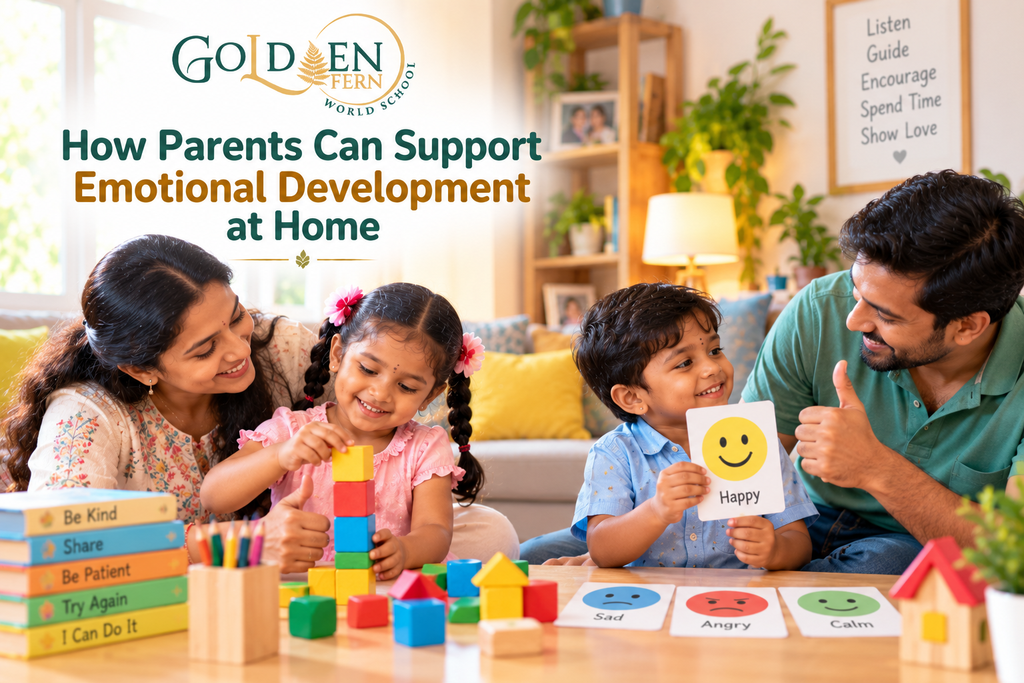
How Parents Can Support Emotional Development at Home
Emotional learning should continue beyond the classroom.
Parents can support their child by creating a calm and open environment at home.
Simple habits can make a difference:
- Listen when your child wants to talk.
- Give names to different emotions.
- Avoid making children feel ashamed of their feelings.
- Encourage children to express themselves politely.
- Read stories together.
- Give children small responsibilities.
- Appreciate their efforts.
- Teach simple ways to calm down.
- Spend quality time together.
Most importantly, parents can show children how to handle emotions through their own behaviour.
Children often learn by observing the adults around them.
Emotional Development and School Readiness
Emotional development can help children become more comfortable with school routines.
A child who can communicate feelings, ask for help, interact with classmates, and manage small frustrations may find it easier to participate in classroom activities.
Therefore, school readiness is not only about knowing letters and numbers. It also includes emotional confidence, communication, independence, and positive social behaviour.
Why a Positive Pre-Primary Environment Matters
Every child develops at a different pace. Some children may quickly communicate their feelings, while others may need more time and support.
A good pre-primary environment respects these differences.
Children need encouragement rather than pressure. They need opportunities to explore, make small mistakes, try again, and learn from everyday experiences.
When teachers and parents work together, children can receive consistent support at home and at school.
Supporting the Whole Child at Golden Fern World School
At Golden Fern World School, we believe that early education should support the whole child.
Our pre-primary learning approach gives importance to academic learning as well as social and emotional growth. Through play, stories, group activities, creative experiences, and caring teacher interactions, children get opportunities to build confidence and understand their emotions.
A happy child is more ready to explore, participate, communicate, and learn.
Conclusion
Emotional development in children is an important part of early childhood education. Children need opportunities to understand their feelings, express themselves, build friendships, and manage everyday challenges.
Pre-primary education can provide a safe and supportive environment for developing these skills. With caring teachers, meaningful activities, positive friendships, and support from parents, children can gradually become more confident and emotionally aware.
The early years create an important foundation for future learning and relationships. Helping children understand their emotions today can support them as they grow into confident and caring individuals.
Golden Fern World School
At Golden Fern World School, we focus on creating a positive and child-friendly learning environment where young children can learn, explore, express themselves, and grow with confidence.
Location: Miyapur, Hyderabad
Academic Year: 2027–28rstand different