
Uncategorized
How Pre-Primary Schools Develop Communication Skills in Children

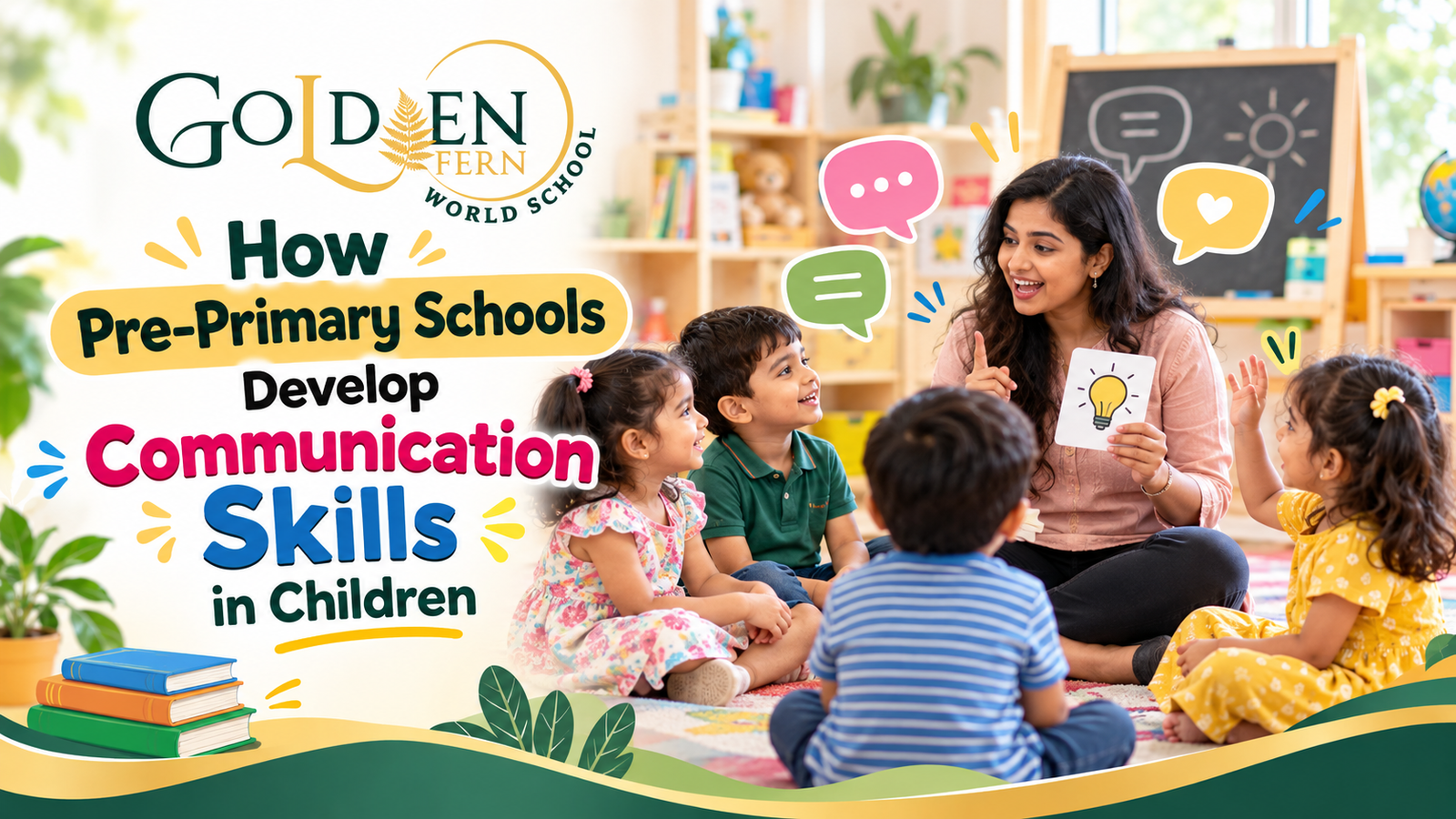
A child’s early conversations may begin with simple words, questions, gestures, and stories about everyday experiences. These small interactions are important because they help children learn how to express their thoughts, understand others, listen carefully, and respond with confidence. Developing communication skills in pre-primary children starts through regular opportunities to talk, listen, ask questions, and share ideas.
Pre-primary education creates a natural environment for children to practise speaking and listening every day. Instead of learning only through books and worksheets, young learners can develop language skills through conversations, storytelling, songs, rhymes, role play, games, picture-based activities, and group play. These engaging experiences allow children to use new words, form simple sentences, express their feelings, and communicate with teachers and classmates.
A supportive classroom can make communication feel comfortable and enjoyable. At Golden Fern World School, everyday learning experiences can give children opportunities to participate in conversations, answer questions, share their ideas, listen to others, and express themselves in a positive environment. With regular encouragement and meaningful interaction, communication skills in pre-primary children can become a natural part of their early learning journey.
Why Communication Skills Are Important in Early Childhood
Communication is an important part of a child’s early development. Children use communication skills to express their needs, share ideas, ask questions, understand instructions, make friends, and participate in classroom activities.
Strong communication skills can also support other areas of learning. When children learn to listen carefully and express their thoughts clearly, they can participate more confidently in discussions, storytelling, creative activities, and group learning.
Pre-primary education can therefore provide a valuable environment where children get regular opportunities to practise communication naturally.
Talking Begins With Simple Conversations
Children do not need complicated lessons to practise speaking.
A simple conversation about breakfast, a favourite animal, a drawing, a toy, or something they saw on the way to school can become a useful learning opportunity.
Teachers can ask questions such as:
- What did you draw?
- Which colour did you choose?
- What did you see outside?
- What happened in the story?
- Which game would you like to play?
- Why did you choose that picture?
Questions like these encourage children to think before answering. Gradually, short answers can develop into longer explanations.
The goal is not to make every child speak perfectly. The goal is to create a comfortable environment where children feel encouraged to communicate.
Stories Give Children Ideas to Express
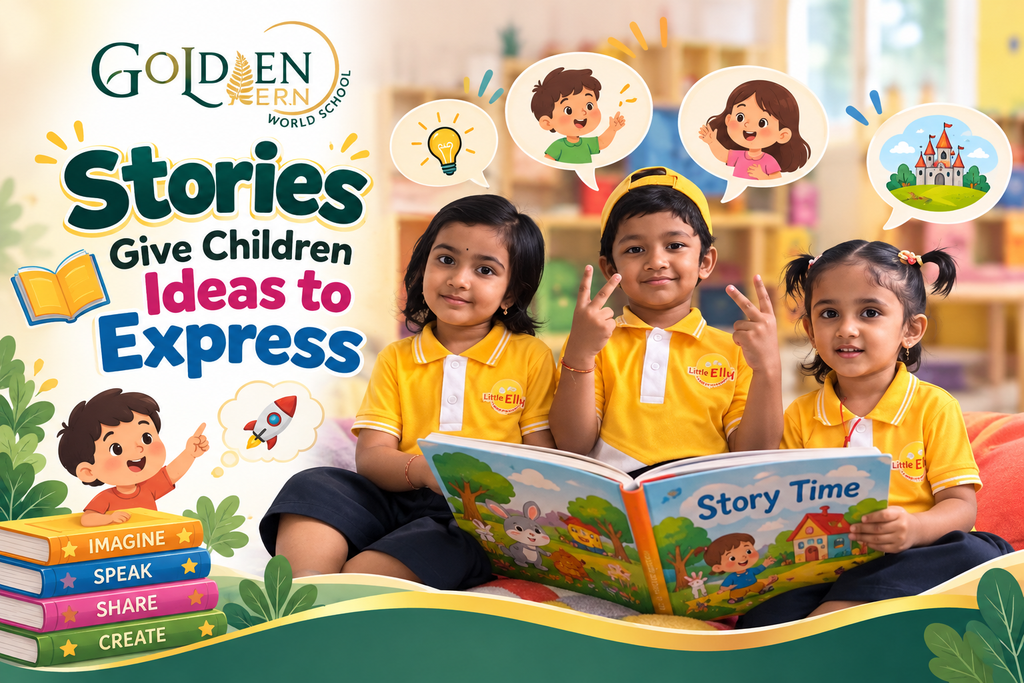
Children often connect easily with stories.
A teacher can read a short story and invite the class to talk about it. Children might identify a character, describe a picture, guess what happens next, or explain which part they enjoyed.
There is no need for every answer to sound perfect.
The important part is giving children a reason to speak.
Storytelling can also introduce new vocabulary in a meaningful context. When a new word is connected with a character, picture, action, or event, children may find it easier to understand and remember.
Teachers can also encourage children to retell a familiar story using their own words. This gives them an opportunity to practise vocabulary, sentence formation, memory, and confidence while speaking.
Rhymes Turn Language Into Fun
Songs and rhymes are naturally engaging for young learners.
Repeating words with rhythm can help children become familiar with sounds, words, and simple sentence patterns. Rhymes can also encourage children to listen carefully and participate together.
For example, children can sing a familiar rhyme while using actions. The combination of movement, rhythm, and words can make language learning enjoyable.
Rhymes can also help children practise pronunciation and remember new words through repetition.
Role Play Encourages Children to Speak
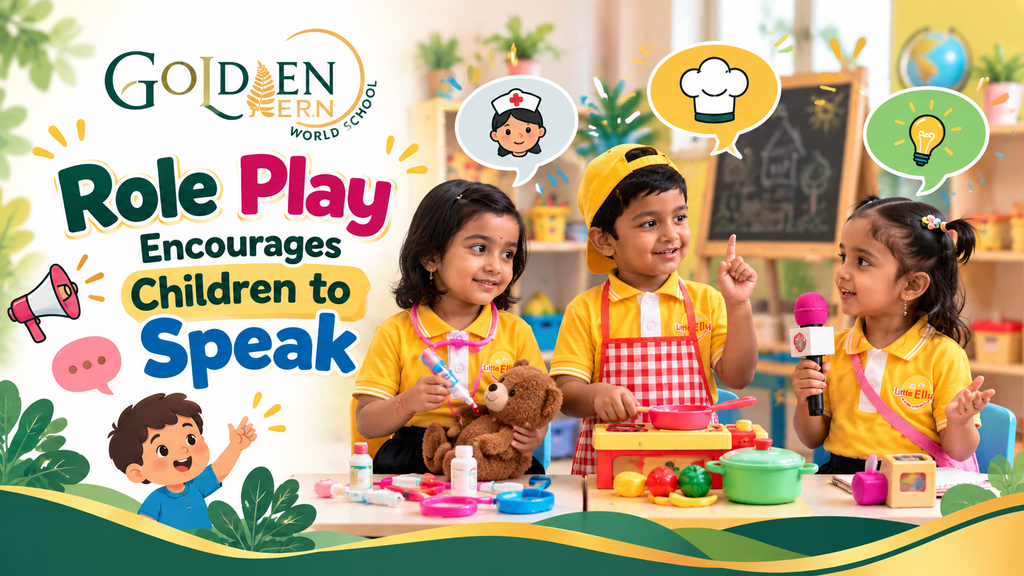
Role play gives children an opportunity to use language in everyday situations.
A classroom activity might involve pretending to run a shop, visit a doctor, travel on a bus, prepare food, or welcome a guest.
During these activities, children can practise simple conversations such as asking for something, answering a question, greeting someone, or explaining what they are doing.
Role play can make communication feel natural because children are using language while playing
Group Activities Build Listening and Speaking Skills
Communication is not only about speaking. Children also need to learn how to listen to others.
Group activities can give children opportunities to:
- Listen when another child is speaking
- Wait for their turn
- Follow simple instructions
- Respond to questions
- Share ideas
- Work together
- Respect different opinions
Group activities can support communication skills in pre-primary children by giving them opportunities to listen, speak, take turns, share ideas, and interact with their classmates.
These everyday interactions can gradually help children understand that communication involves both speaking and listening.munication involves both speaking and listening.
Picture-Based Activities Help Children Express Ideas
Pictures can give young children something concrete to talk about.
A teacher may show a picture of a park, classroom, animal, family, or outdoor scene and ask children what they can see.
Children might describe:
- People and animals
- Colours and objects
- Actions taking place
- Places
- What they think might happen next
For children who are still developing their vocabulary, pictures can provide useful prompts and make it easier to start a conversation.
Classroom Questions Encourage Critical Thinking
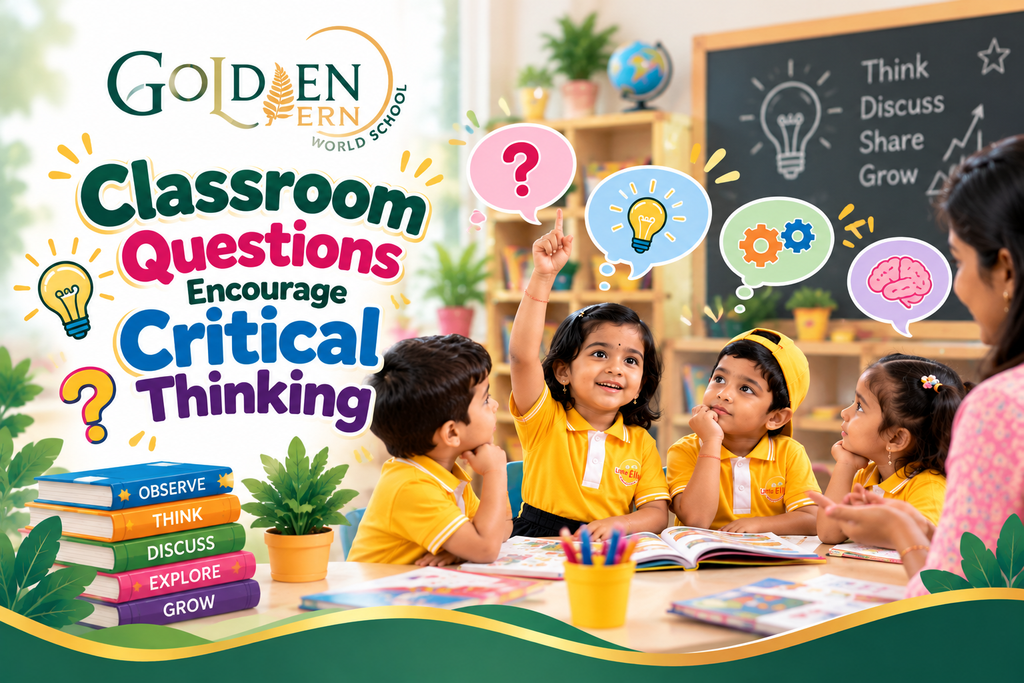
Teachers can use open-ended questions to encourage children to explain their thoughts rather than simply give one-word answers.
For example, instead of asking, “Is the boy happy?” a teacher might ask, “Why do you think the boy is happy?”
Similarly, instead of asking, “Do you like the story?” the teacher might ask, “Which part of the story did you like and why?”
Questions like these can encourage children to think, explain, and communicate their ideas.
Show and Tell Activities Build Confidence
Show and tell is a simple classroom activity that can encourage children to speak in front of others.
A child may bring or choose an object and talk about it using a few simple sentences.
For example:
“This is my favourite toy.”
“I like it because it is colourful.”
“I play with it at home.”
The number of sentences does not matter as much as giving children an opportunity to speak in front of their classmates.
With regular encouragement, children may gradually become more comfortable sharing their ideas with a group.
Learning Through Play Supports Communication
Play is an important part of early childhood learning.
When children play together, they naturally communicate. They ask questions, make suggestions, negotiate roles, explain rules, and respond to their friends.
Teachers can support this process by introducing activities that encourage children to interact with one another.
For example, building blocks, pretend play, puzzles, group games, and creative activities can create opportunities for children to communicate while learning.
Teachers Play an Important Role in Communication Development
Teachers can influence how comfortable children feel when expressing themselves.
A supportive teacher can:
- Listen patiently
- Give children enough time to answer
- Encourage questions
- Avoid making children feel embarrassed about mistakes
- Introduce new vocabulary naturally
- Encourage children to participate
- Celebrate their efforts
- Model clear and respectful communication
Children develop at different rates. Some may speak confidently in a group, while others may need more time and encouragement.
A patient and supportive classroom can help every child participate at their own pace.
How Pre-Primary Schools Can Create a Communication-Friendly Classroom
A communication-friendly classroom does not depend on one activity. It can be created through everyday interactions.
Schools can provide opportunities for children to:
- Talk with teachers
- Work in small groups
- Participate in storytelling
- Sing songs and rhymes
- Take part in role play
- Describe pictures
- Share personal experiences
- Ask and answer questions
- Participate in classroom discussions
- Communicate during play
The more meaningful opportunities children receive to use language, the more naturally communication can become part of their daily learning experience.
Communication Skills and Social Development
Communication is closely connected with children’s social interactions.
When children learn to express what they want, listen to others, take turns, and respond respectfully, they can participate more comfortably in group activities.
For example, a child may learn to say:
“Can I play with you?”
“Please give me the ball.”
“It’s my turn.”
“Can we play together?”
These simple sentences represent important everyday communication skills.
How Parents Can Support Communication Skills at Home
Communication development does not stop when school ends.
Parents can support children’s language development through simple daily conversations.
Instead of asking only questions that require a “yes” or “no” answer, parents can ask children to describe their experiences.
For example:
- What was the most interesting thing you did today?
- Which activity did you enjoy at school?
- What story did your teacher tell?
- Who did you play with today?
- What would you like to do tomorrow?
Parents can also read stories with children, listen patiently when they speak, and encourage them to describe pictures or everyday experiences.
Parents can also support communication skills in pre-primary children through everyday conversations, reading stories, asking questions, and encouraging children to express their thoughts.
The aim is to make communication a natural part of family life.
Signs of a Supportive Communication Environment
A positive communication environment can give children opportunities to:
- Speak without fear of making mistakes
- Ask questions freely
- Listen to others
- Express feelings and ideas
- Participate in group activities
- Learn new vocabulary
- Build confidence through regular practice
Every child is different, so communication development may happen at a different pace. Consistent encouragement and meaningful interaction can help children practise these skills over time.
Choosing a Pre-Primary School That Supports Communication
When parents explore pre-primary schools, communication development can be one of the areas they consider.
Parents may look for classrooms where children have opportunities to participate rather than simply listen. Storytelling, rhymes, role play, group activities, conversations, creative learning, and play-based experiences can all provide opportunities for children to use language.
A warm classroom atmosphere can also help children feel comfortable asking questions and sharing their thoughts.
At Golden Fern World School, creating engaging learning experiences for young children can help make classroom communication a natural part of the learning journey.
Frequently Asked Questions About Communication Skills in Pre-Primary Children
How do pre-primary schools develop communication skills?
Pre-primary schools can develop communication skills through conversations, storytelling, rhymes, songs, role play, group activities, picture discussions, classroom questions, show and tell, and play-based learning.
Why are communication skills important for pre-primary children?
Communication skills help children express their needs, share ideas, ask questions, listen to others, participate in activities, and interact with teachers and classmates.
How does storytelling improve communication skills?
Storytelling gives children opportunities to listen, learn new words, describe characters and events, answer questions, predict what happens next, and retell stories using their own words.
Do rhymes help children develop language skills?
Yes. Rhymes can provide opportunities for children to hear and repeat words, practise sounds, learn vocabulary, and participate in language activities in an enjoyable way.
How does role play help children communicate?
Role play allows children to practise conversations in familiar situations. They can ask questions, respond to others, use new words, and express ideas while participating in imaginative play.
How can parents improve communication skills at home?
Parents can encourage communication by talking with children every day, reading stories together, asking open-ended questions, listening patiently, discussing daily experiences, and encouraging children to describe what they see and feel.
Should children be forced to speak in front of others?
Children can be encouraged to participate, but they may need different amounts of time and support. A positive environment can help children gradually become more comfortable speaking and sharing their ideas.
Final Thoughts
Communication skills begin developing through everyday experiences.
A simple conversation, a story, a rhyme, a classroom question, a game with friends, or a few minutes of role play can give a child another opportunity to listen, speak, think, and express an idea.
Pre-primary education can provide a supportive environment where these experiences happen regularly. When children are given opportunities to communicate in a positive and engaging setting, they can gradually develop vocabulary, listening skills, confidence, and the ability to express themselves.
Schools and families can work together to strengthen communication skills in pre-primary children through meaningful conversations, play, stories, and regular encouragement.
At Golden Fern World School, meaningful classroom interactions and engaging learning experiences can help make communication an enjoyable part of a child’s early learning journey.
For parents looking for a pre-primary school, understanding how a school encourages communication, participation, play, and expression can be an important part of exploring the learning environment.