
Why Early Childhood Education Is Important
The first few years of a child’s life are filled with discovery. Every new word, game, question, friendship, and experience can teach a child something meaningful. This is why early childhood education has an important place in a child’s growing years.
A pre-primary school is not simply a place where children learn alphabets and numbers. It is a space where they begin to understand people, surroundings, routines, communication, and everyday experiences.
At Goldenfern Pre-Primary School, we believe that young children should have opportunities to learn at their own pace while enjoying activities that match their age and interests.
What Does Early Childhood Education Mean?
Early childhood education is the learning children experience during their early years before entering higher levels of school.
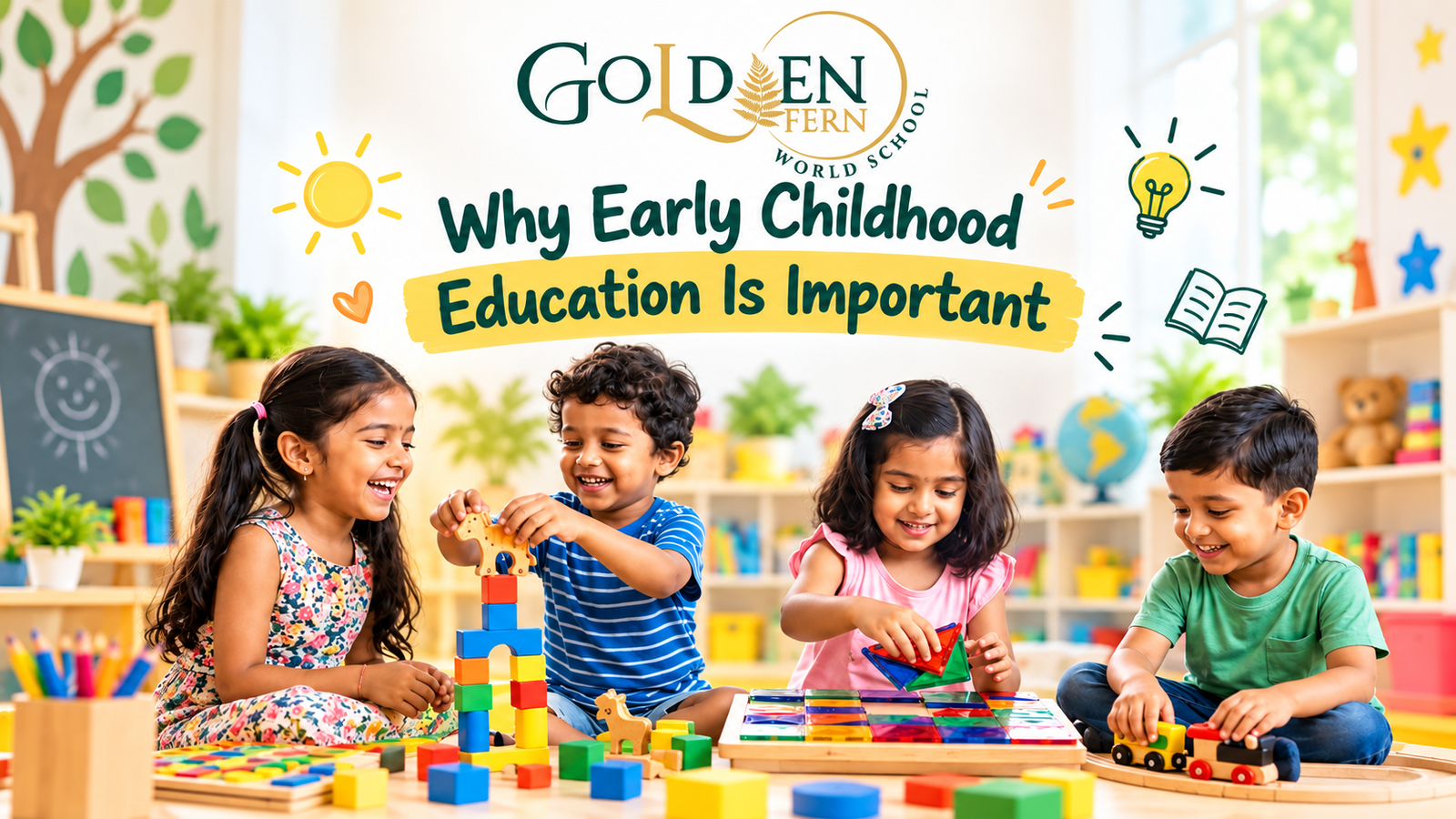
At this stage, learning can happen through many simple experiences. A child may learn colours while painting, practice counting while arranging toys, improve speaking skills during a story, or learn patience while waiting for a turn in a group game.
This makes early education different from traditional classroom learning. Children are encouraged to participate instead of simply watching or memorising.
1. Helps Children Become Comfortable With Learning
For a young child, a classroom is a completely new experience. There are new faces, new surroundings, different activities, and unfamiliar routines.
A good pre-primary school introduces these experiences gradually. Children get time to become familiar with their surroundings and understand how a school day works.
When children associate learning with enjoyable experiences, they may become more willing to participate in new activities.
2. Gives Children Opportunities to Communicate
Children have many thoughts and feelings, but they may not always know how to express them.
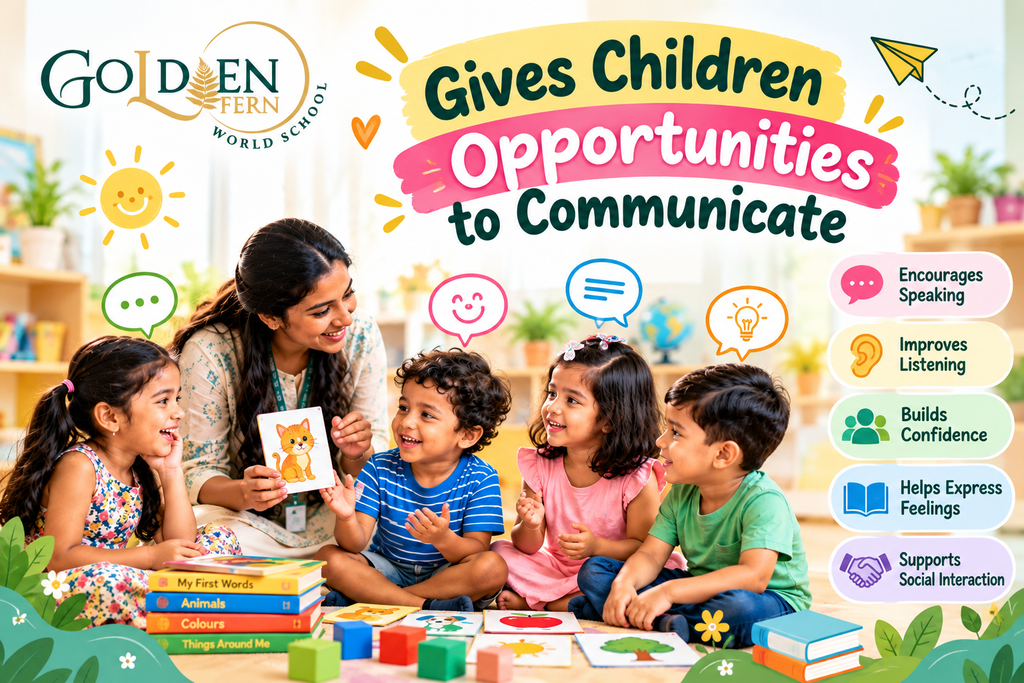
Daily conversations, stories, songs, pretend play, and group activities give children chances to speak and listen.They can practice:
- Saying what they need
- Asking questions
- Describing things
- Listening to others
- Learning new words
- Expressing simple feelings
These everyday interactions can gradually make communication more natural.
3. Teaches Children How to Interact With Others
Meeting other children creates learning opportunities that are difficult to get through individual play alone.
During group activities, children may need to share materials, wait for someone else, follow simple rules, or work together.
These small moments teach children about cooperation and consideration. They also give children opportunities to form their first friendships outside the family.
4. Helps Children Understand Their Feelings
Young children can experience strong emotions without always knowing how to describe them.
A supportive school environment gives them opportunities to talk about what they feel. Teachers can guide children through simple situations and help them understand that different emotions are normal.
For example, a child may learn to say that they are upset instead of reacting without words. Such small steps can help children communicate their feelings more clearly.
5. Encourages Children to Try Things Independently
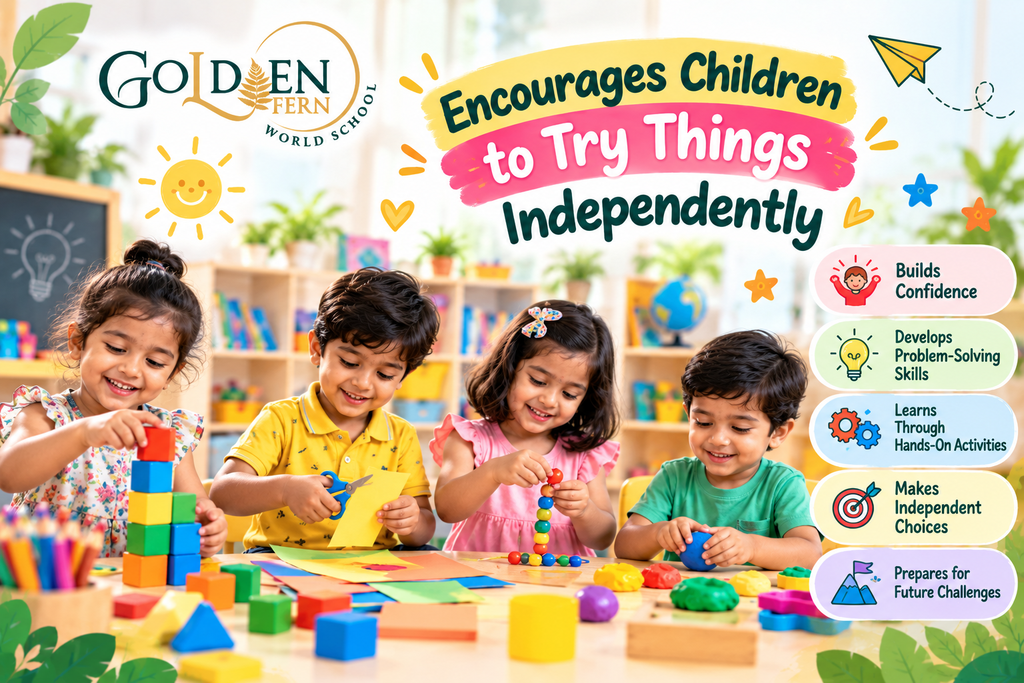
Children often want to do things by themselves. Early education can give them safe opportunities to practise independence.
Simple responsibilities such as putting toys away, choosing an activity, carrying personal belongings, or completing a small task can help children feel capable.
The objective is not to expect perfection. It is to give children suitable opportunities to try, make mistakes, and try again.
6. Gives Imagination a Place to Grow
A cardboard box can become a house. A few blocks can become a building. A simple drawing can become a story.
Children naturally create their own ideas when they have the freedom to explore.
Art, music, storytelling, role play, clay activities, and building games can give children different ways to express their imagination.
Such activities allow children to create rather than simply follow instructions.
7. Makes Everyday Learning More Interesting
Young children often learn by doing.
Instead of explaining everything through books, teachers can introduce concepts through objects, movement, games, pictures, songs, and activities.
For example, sorting toys can introduce patterns and colours. Counting objects can make numbers easier to understand. A story can introduce new vocabulary.
When children participate directly, an ordinary activity can become a learning experience.
8. Supports Early Thinking Skills
Children are constantly trying to understand how things work.
Why does something fall? Where does a toy fit? Which object is bigger? What happens if two blocks are placed together?
Activities that allow children to experiment can encourage them to think, compare, observe, and find simple solutions.
Puzzles, matching activities, construction games, sorting exercises, and memory games can provide useful opportunities for this kind of learning.
9. Provides Opportunities for Physical Activity
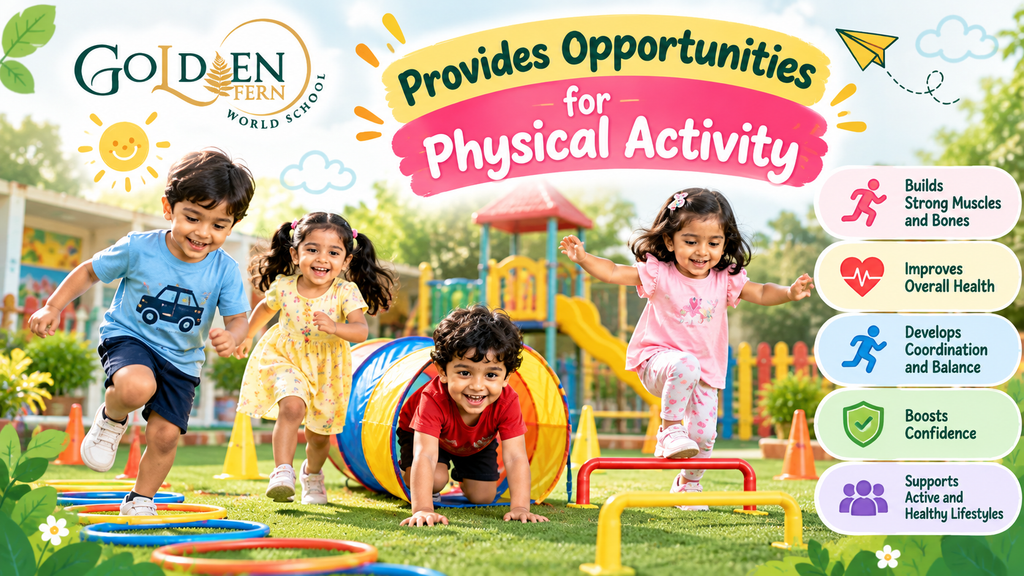
Children need movement as much as they need quiet learning activities.
Running, jumping, dancing, balancing, throwing, drawing, cutting, building, and other age-suitable activities allow children to use different physical skills.
Active play can also make the school day more enjoyable and give children opportunities to move instead of sitting for long periods.
10. Introduces Children to Daily Routines
A predictable routine can help children understand what happens next.
A typical pre-primary school day may include arrival, classroom activities, play, meals or snacks, creative work, outdoor time, and other planned experiences.
Following such routines can help children practise listening, waiting, completing tasks, and moving from one activity to another.
These experiences can be useful when children later enter a more structured school environment.
11. Helps Children Adjust to a School Environment
For some children, being away from parents for the first time can feel unfamiliar.
A pre-primary school provides an opportunity to gradually experience learning outside the home.
Children meet teachers, spend time with classmates, participate in activities, and become familiar with classroom routines.
With time and encouragement, many children become more comfortable with this new environment.
12. Encourages Children to Ask Questions
Children are naturally curious. They often want to know how, why, when, and where.
Instead of discouraging questions, early learning can give children opportunities to explore them.
A teacher might encourage a child to observe an object, try something new, compare two things, or explain what they noticed.
This keeps curiosity connected with learning.
The Role of Play in Early Learning
Play is one of the most natural ways for young children to explore their surroundings.
When children build, draw, pretend, sing, move, or play games, they are doing more than having fun. They are also practising different skills.
A simple group game can involve listening and taking turns. Building blocks can involve planning. Pretend play can involve communication and imagination.
This is why play can be an important part of an early learning environment.
What Parents Can Do at Home
Parents do not need complicated teaching methods to support their child’s early learning.
Small activities at home can be valuable.
Parents can:
- Read a short story together
- Talk about the child’s day
- Encourage children to describe pictures
- Let children help with simple household tasks
- Play age-appropriate games
- Ask open-ended questions
- Encourage drawing and creative activities
- Give children time to explore
- Appreciate their efforts
Regular conversations and shared activities can make learning part of everyday family life.
Choosing the Right Pre-Primary School
Every child is different, so parents should look for a school environment that suits their child’s age, personality, and learning needs.
When visiting a pre-primary school, parents can observe:
- How teachers interact with children
- Whether the surroundings are child-friendly
- What types of activities are provided
- How classrooms are maintained
- Whether children receive opportunities for active play
- How the school communicates with parents
- Whether the daily routine is suitable for young children
These observations can help parents understand what their child may experience at the school.
How Goldenfern Pre-Primary School Approaches Early Learning
At Goldenfern Pre-Primary School, we want children to feel comfortable while discovering something new each day.
Our learning environment is designed around age-appropriate experiences where children can participate, explore, communicate, create, and play.
We understand that children do not all learn in exactly the same way. Some may enjoy drawing, while others may prefer movement, stories, building activities, or group games.
Giving children different ways to participate can make their early school experience more enjoyable.
A Small Beginning Can Lead to Many New Experiences
Early childhood education is not about making young children study for long hours. It is about giving them meaningful experiences during an important stage of their growth.
A conversation can develop language.
A game can teach cooperation.
A painting activity can encourage creativity.
A puzzle can encourage thinking.
A classroom routine can introduce responsibility.
Each experience may seem small, but together they become part of a child’s early learning journey.
At Goldenfern Pre-Primary School, we aim to make those early experiences enjoyable, welcoming, and meaningful for every child.
Frequently Asked Questions
What is the purpose of early childhood education?
It gives young children opportunities to explore, communicate, play, interact with others, and become familiar with learning environments.
What can children learn at a pre-primary school?
Depending on their age and activities, children can explore language, numbers, colours, shapes, creativity, movement, communication, social interaction, and everyday routines.
Why is play useful for young children?
Play allows children to learn through direct experience. They can experiment, communicate, imagine, move, and solve simple challenges while enjoying the activity.
Can parents support early learning at home?
Yes. Reading, talking, playing, drawing, storytelling, and involving children in simple daily activities can all create useful learning opportunities.
How can pre-primary school prepare a child for the next stage?
Children become familiar with classroom routines, teachers, group activities, communication, simple instructions, and spending time in a learning environment.
What should parents look for in a pre-primary school?
Parents can consider the learning approach, teacher-child interaction, cleanliness, safety, activities, daily routine, and the overall environment provided for children.
Conclusion
Early childhood is a period when children are discovering the world around them every day. A thoughtfully planned pre-primary school can give them a place to ask questions, make friends, express themselves, experiment, and enjoy new experiences.
The aim is not to rush children into academic pressure. It is to give them suitable experiences that encourage curiosity, confidence, communication, and independence.
At Goldenfern Pre-Primary School, we are committed to creating a cheerful and supportive beginning to every child’s school journey.