
Uncategorized
How Art and Craft Activities Help Preschool Children Learn

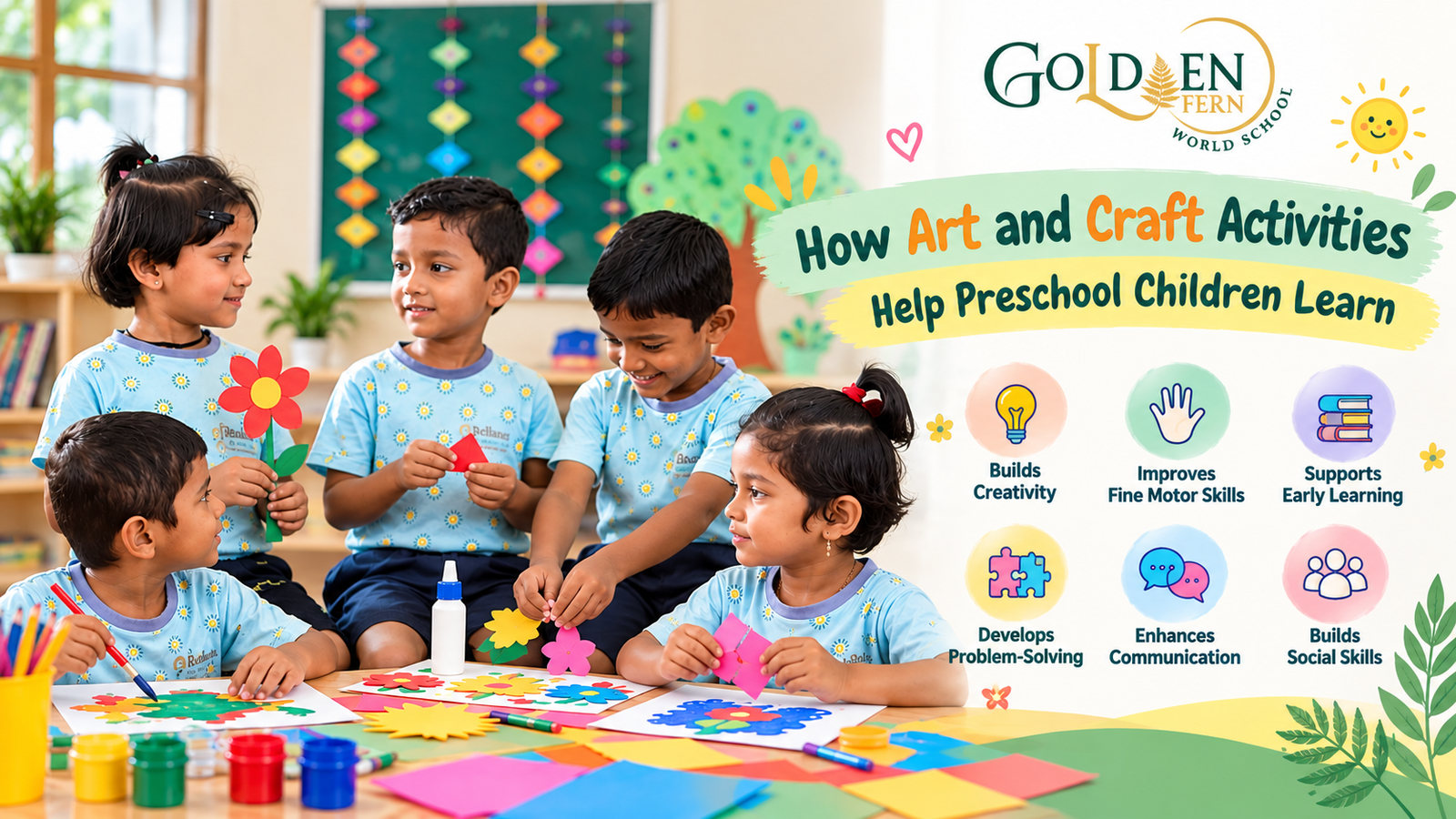
Art and craft activities bring colour, imagination, and excitement into early childhood education. A simple drawing, a paper flower, or a colourful painting can become a meaningful learning experience for a young child.
Art and craft for preschool children provides opportunities to explore new ideas, practise hand movements, communicate thoughts, and discover different materials. Children can learn while creating something they enjoy.
These activities do not require expensive supplies or complicated instructions. Simple materials and a little imagination can turn an ordinary classroom activity into an exciting learning experience.
Let’s explore how creative activities support children’s development and discover simple ideas that parents and teachers can use.
1. Why Art and Craft for Preschool Children Matters
The early years are filled with curiosity. Children want to touch, explore, observe, and understand the things around them.
Creative activities provide opportunities to satisfy this curiosity. Children can experiment with colours, explore textures, and create objects using different materials.
Unlike activities with fixed answers, art allows children to explore different possibilities.
Learning Through Creative Experiences
When children draw, paint, or build something, they make small decisions throughout the activity.
They choose materials, combine colours, and decide what to create. These experiences encourage active participation and independent thinking.
2. How Preschool Art Activities Develop Creativity
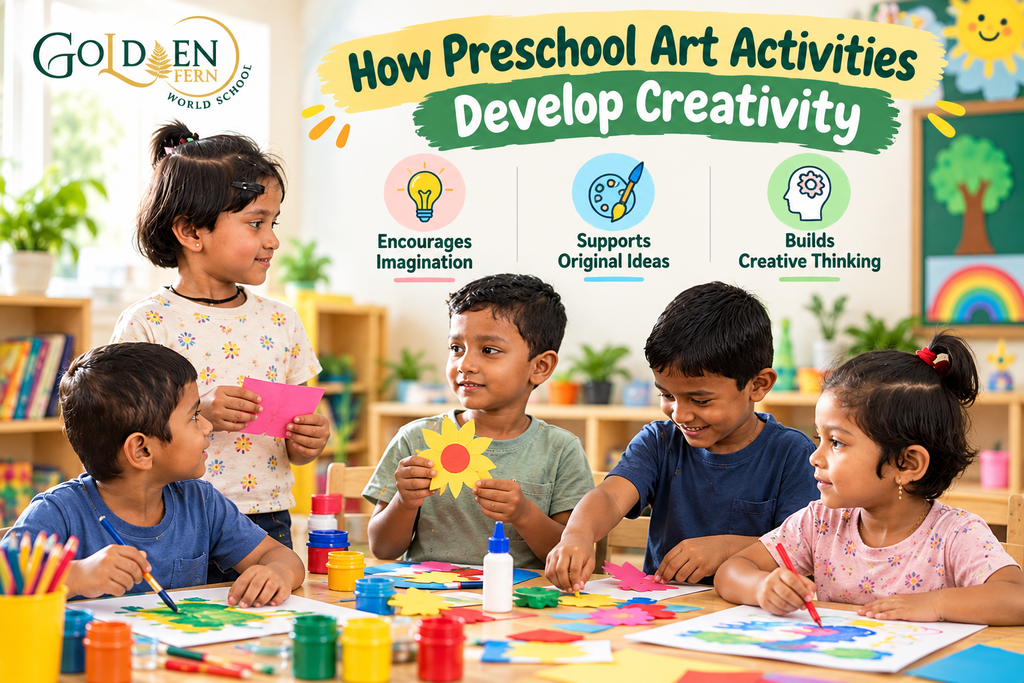
Creativity is an important part of early childhood development. It encourages children to explore ideas and imagine different possibilities.
Art provides a space where children can create something without following a fixed pattern.
Encouraging Imagination
Give children coloured paper, crayons, paint, and other safe materials.
Ask them to create something they like. Some children may draw flowers, while others may create imaginary animals or colourful houses.
Allow them to explore their ideas without expecting identical results.
Supporting Creative Thinking
Instead of telling children exactly what to draw, ask open-ended questions.
For example, ask what they would like to create or which colours they want to use.
These simple conversations encourage children to think independently.
3. Art and Craft Activities Improve Fine Motor Skills
Fine motor skills involve small movements of the hands and fingers. These movements are important for everyday tasks and early writing development.
Creative activities provide opportunities to practise these movements naturally.
Drawing and Colouring
Holding crayons, drawing lines, and colouring pictures help children practise hand control.
Children can begin with simple marks before exploring circles, shapes, and patterns.
Paper Cutting and Folding
Age-appropriate paper activities encourage children to use their hands carefully.
With adult supervision, children can practise using child-safe scissors and folding paper into simple shapes.
Clay Modelling
Playing with child-safe modelling dough allows children to squeeze, roll, press, and shape materials.
These movements provide additional opportunities to develop finger strength and coordination.
4. How Art and Craft Supports Early Learning
Creative activities can introduce children to basic educational concepts through practical experiences.
Instead of learning only from pictures or worksheets, children can explore ideas while creating something.
Learning Colours Through Painting
Provide different paint colours and allow children to experiment.
Ask them to identify colours and observe what happens when two colours are mixed.
This activity encourages curiosity and colour recognition.
Understanding Shapes Through Crafts
Give children paper circles, squares, triangles, and rectangles.
Ask them to arrange these shapes to create houses, vehicles, animals, or other familiar objects.
Exploring Numbers Through Art
Children can practise counting while completing simple projects.
For example, they can count five paper petals before creating a flower.
These activities connect creativity with early mathematical understanding.
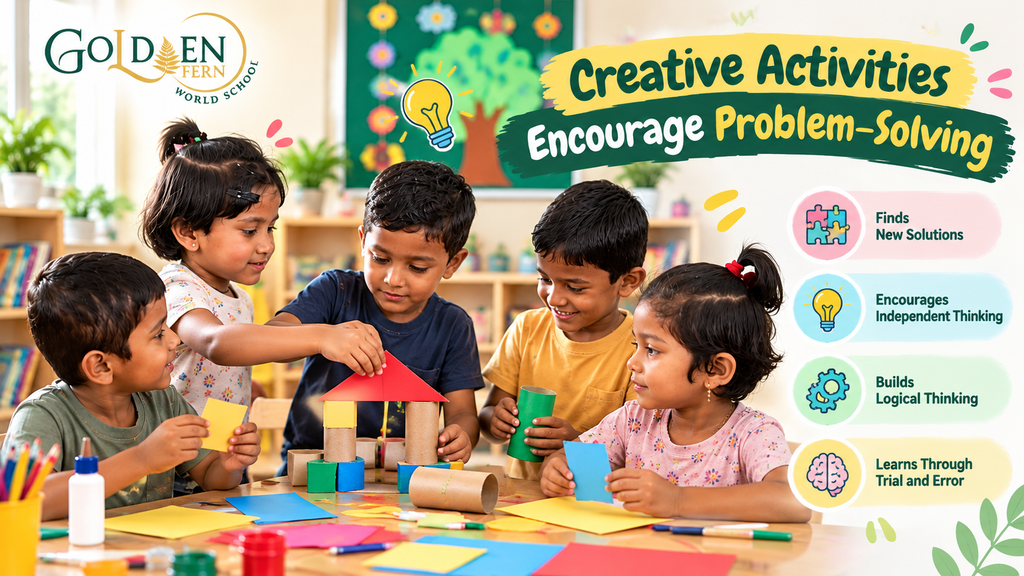
5. Creative Activities Encourage Problem-Solving
Children often encounter small challenges while creating artwork.
A paper piece may not fit properly. A structure may fall. A child may need to find another way to complete a project.
These situations create opportunities for problem-solving.
Learning Through Trial and Error
Allow children to experiment before providing a solution.
Ask questions such as:
- What could you try next?
- Which material might work better?
- Can you find another way?
- What happens if you change the shape?
Encouraging children to explore different solutions can support independent thinking.
6. Art Activities Support Communication and Self-Expression
Children may find it difficult to explain every thought or feeling through words.
Drawing, painting, and other creative experiences provide additional ways to express ideas.
Talking About Artwork
After completing an activity, encourage children to describe their creations.
Ask what they made, which colours they selected, and what they enjoyed most.
These conversations provide opportunities to practise vocabulary and communication.
Building Confidence
Children can feel proud when they complete a project independently.
Displaying their creations and appreciating their efforts can encourage them to explore new activities.
Focus on participation and creativity rather than expecting perfect results.
7. Group Craft Activities Develop Social Skills
Creative activities become even more interesting when children work together.
Group projects provide opportunities to communicate, share materials, listen to others, and cooperate.
Learning to Share
Organise a simple classroom collage.
Give children coloured paper, safe craft materials, and a large sheet.
Allow everyone to contribute to the same project.
Children can practise sharing materials and waiting for their turns.
Encouraging Teamwork
Ask children to create a paper garden, classroom mural, or seasonal decoration together.
These activities encourage cooperation while allowing each child to contribute individual ideas.
8. Simple Art and Craft Ideas for Preschool Children
Parents and teachers can introduce creative learning without complicated preparation.
Here are five simple activities suitable for young learners.
Paper Collage
Give children colourful paper and ask them to create pictures by arranging and sticking different pieces.
This activity encourages creativity, colour recognition, and hand coordination.
Finger Painting
Provide washable, child-safe paints and large sheets of paper.
Allow children to explore colours and create patterns using their fingers.
Finger painting offers opportunities for sensory exploration and creative expression.
Nature Collage
Collect safe fallen leaves and other suitable natural materials during a supervised outdoor activity.
Children can arrange them on paper to create nature-inspired artwork.
This activity connects creativity with environmental observation.
Playdough Creations
Give children child-safe modelling dough.
Encourage them to create simple shapes, fruits, flowers, or imaginary objects.
The activity provides opportunities to practise hand movements and creative thinking.
Recycled Paper Crafts
Use clean cardboard, paper rolls, and other safe reusable materials.
Children can transform them into houses, vehicles, animals, or classroom decorations.
This activity also introduces simple ideas about reusing everyday materials.
9. Benefits of Art and Craft for Preschool Children
Creative experiences can support different areas of development when activities are suitable for children’s ages and abilities.
Creativity and Imagination
Children explore original ideas and discover different ways to use materials.
Fine Motor Development
Drawing, folding, painting, and modelling provide opportunities to practise small hand movements.
Language Development
Conversations about artwork encourage children to describe their ideas and learn new words.
Problem-Solving Skills
Children experiment with materials and explore different ways to complete projects.
Social Development
Group activities encourage communication, sharing, and cooperation.
Confidence and Independence
Making creative decisions and completing projects can encourage children to become more independent.
10. How Parents Can Encourage Art and Craft at Home
Parents can make creative learning part of everyday routines.
A small table, some paper, crayons, and safe craft materials can provide many opportunities for exploration.
Create a Simple Art Corner
Choose a comfortable space where children can draw, paint, and create.
Keep suitable materials within reach and supervise activities when necessary.
Encourage Independent Creativity
Allow children to select colours and decide what they want to create.
Avoid correcting every detail of their artwork.
Appreciate Their Efforts
Ask children about their creations and show interest in their ideas.
Display selected artwork at home to recognise their participation and effort.
These simple practices can make creative activities an enjoyable part of family time.
11. How Pre-Primary Schools Encourage Creative Learning
Pre-primary schools can introduce art and craft through planned classroom experiences.
Teachers can connect creative activities with storytelling, numbers, colours, nature, and other early learning topics.
For example, a lesson about plants can include leaf printing. A lesson about shapes can include a paper collage.
Creating an Engaging Classroom
A creative classroom provides children with opportunities to experiment and explore.
Teachers can offer different materials, introduce simple projects, and encourage children to share their ideas.
Combining Play with Learning
Play-based activities allow children to discover concepts through practical experiences.
Teachers can guide children while giving them enough freedom to explore independently.
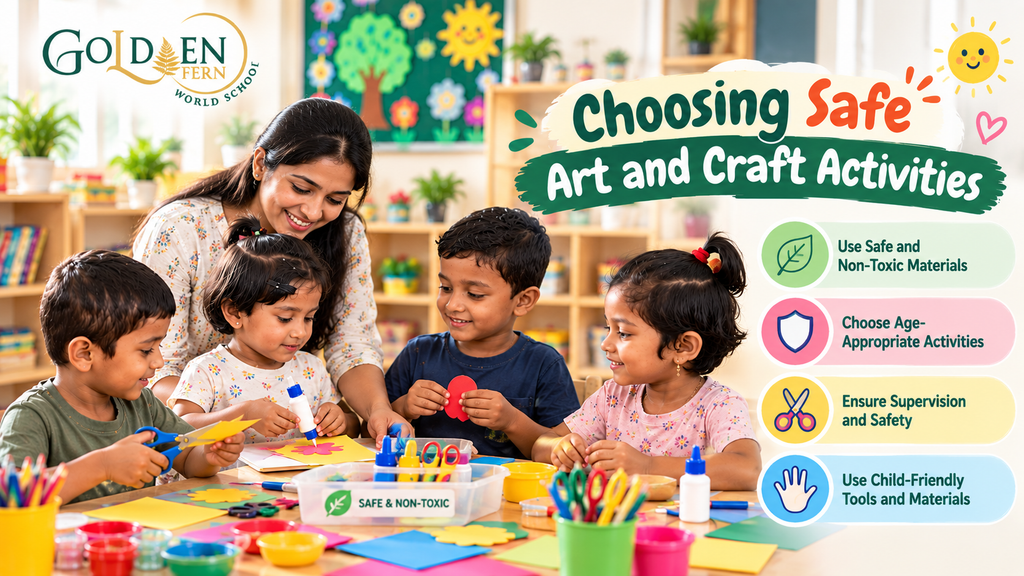
12. Choosing Safe Art and Craft Activities
Safety is important when introducing creative activities to young children.
Parents and teachers should select materials that are suitable for children’s ages and developmental abilities.
Use Child-Friendly Materials
Choose washable paints, suitable crayons, child-safe scissors, and age-appropriate craft supplies.
Avoid materials that present choking hazards or other safety risks.
Provide Adult Supervision
Activities involving scissors, glue, small objects, or water require appropriate supervision.
Keep Activities Age-Appropriate
Simple projects allow young children to participate without depending entirely on adults.
Give children enough time to explore and complete activities at their own pace.
13. Creating a Positive Creative Learning Environment
Children benefit from environments where they feel comfortable exploring new ideas.
A positive learning space should encourage curiosity, experimentation, and self-expression.
Teachers and parents can support this process by providing suitable materials and appreciating children’s efforts.
Avoid comparing one child’s artwork with another.
Every child develops at an individual pace and may approach creative activities differently.
The goal is to make learning enjoyable while providing opportunities for development.
Conclusion
Art and craft activities offer young children more than an opportunity to create colourful pictures.
They encourage exploration, imagination, communication, problem-solving, and practical learning.
From drawing and painting to paper crafts and clay modelling, art and craft for preschool children can support several important developmental skills.
At Golden Fern World School, we believe early education should encourage children to explore, create, communicate, and develop confidence.
Creative learning experiences can help children discover their abilities while making their pre-primary years enjoyable and meaningful.